Owning or managing property in Toronto usually means dealing with parking problems sooner or later. A visitor spot gets used by someone who isn’t visiting anyone. A loading zone gets blocked for hours. A tenant’s reserved space becomes a stranger’s overnight parking spot. When it happens repeatedly, private property towing becomes one of the few tools that actually solves the problem instead of just documenting it.
This guide covers the basics: what private property towing actually is, who is allowed to request it, what has to be in place before a tow can happen, and where things commonly go wrong for property owners who haven’t dealt with it before.
Table of Contents
ToggleWhat Private Property Towing Actually Means
Private property towing is the removal of a vehicle from land that isn’t a public road, at the request of the property owner or someone authorized to act on their behalf — a property manager, superintendent, or security company, for example. It’s a different process from towing off a street or highway, which usually involves police or municipal enforcement rather than a private request.
In Ontario, tow operators, tow truck drivers and storage facilities are regulated under the Towing and Storage Safety and Enforcement Act (TSSEA), which took effect province-wide on January 1, 2024. The Act requires certification for anyone performing towing or storage work, transparent and posted rates, written authorization before a tow, and a formal invoice. If you’re working with a towing company, it’s worth confirming they’re operating under current TSSEA requirements rather than assuming every operator follows the same standard.
Who Can Actually Request a Tow
This is where a lot of confusion happens. Not just anyone standing on a property can call a tow truck and have a car removed. The request generally needs to come from:
- The registered property owner
- A property management company acting on the owner’s behalf
- An authorized on-site representative, such as a superintendent or security firm, where that authority has been documented
A tenant complaining that a stranger parked in “their” spot usually can’t authorize a tow on their own — the request typically has to be routed through whoever manages the property. This matters because an improperly authorized tow can turn into a dispute, or worse, a liability issue for the property.
Signage Is Not Optional
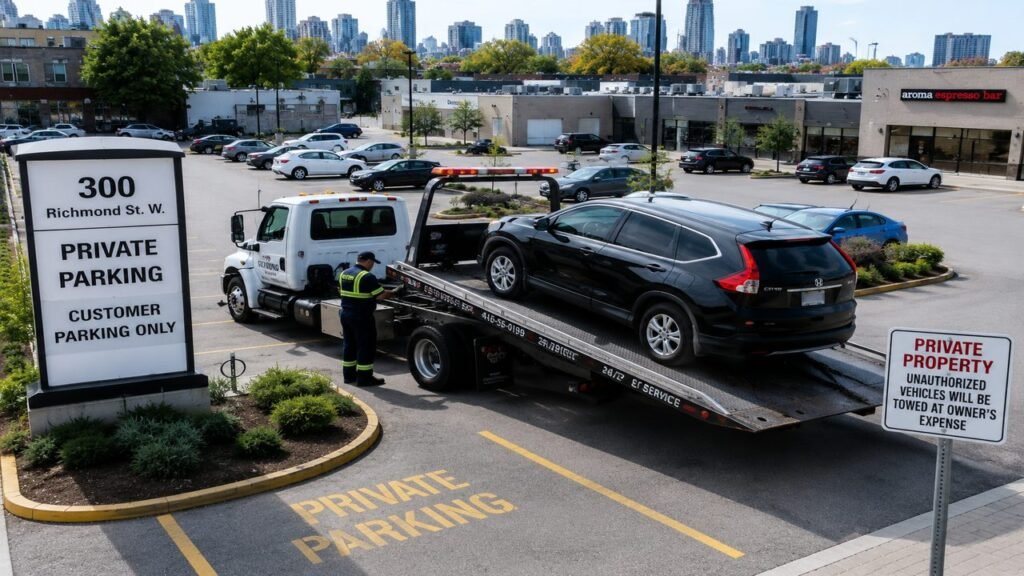
Toronto’s municipal rules around parking on private property, along with provincial towing requirements, put real weight on signage. Before a vehicle can reasonably be towed, the property generally needs clear, visible signage at entrances and throughout the lot that states parking restrictions, who is authorized to park, and that unauthorized vehicles may be removed at the owner’s expense.
Missing or outdated signage is one of the most common reasons a tow gets disputed after the fact. If your property hasn’t had its signage reviewed in a few years, or if it’s inherited from a previous management company, it’s worth having it checked against current requirements before you rely on it.
When Towing Makes Sense
Private property towing isn’t meant to be the first response to every parking issue. It tends to make sense when:
- A vehicle is blocking an entrance, fire route, loading area or accessible space
- Unauthorized parking is a recurring pattern rather than a one-off
- Warnings, notices or communication with tenants haven’t resolved the issue
- The property has proper signage and a documented process already in place
For a single, first-time incident, many property managers start with a notice or a conversation. Towing becomes the practical option once informal steps stop working.
What to Confirm Before You Call a Tow Company
Before requesting property towing for a Toronto property, it helps to have a short checklist ready: current and compliant signage, clear authorization on file for whoever is making the request, and a towing company that can provide certification details and a transparent rate schedule on request. Getting these pieces right upfront avoids most of the disputes that come up after a vehicle has already been removed.
A Quick Note on Legal Accuracy
Towing and parking regulations in Ontario have changed meaningfully in recent years, and municipal rules can be adjusted further. Nothing in this article should be treated as legal advice. If a specific situation on your property is unclear — particularly involving a dispute or repeated non-compliance — it’s worth checking current provincial and City of Toronto sources directly, or speaking with a professional familiar with the current rules.
Property owners who understand these basics tend to have far fewer headaches when a towing situation actually comes up. It’s less about knowing every regulation by heart and more about having the right documentation and process ready before you need it.
FAQs
Can any tenant request a tow from a private property?
Usually not on their own. The request typically needs to come from the property owner or an authorized representative such as a management company, superintendent or security firm, depending on how the property is managed.
Is signage required before a vehicle can be towed?
Clear, visible signage is a standard requirement in practice and is central to whether a tow holds up if it’s disputed. Requirements can vary, so it’s worth confirming current signage rules for your specific property type.
How is private property towing different from towing off a street?
Private property towing is requested by the property owner or their representative, while towing from a street or highway is generally directed by police or municipal enforcement rather than a private party.
What should I check before hiring a towing company for my property?
Confirm the company and drivers are certified under Ontario’s current towing regulations, ask for a written rate schedule, and make sure your property’s signage and authorization process are documented.
Is towing the right first step for a parking problem?
Not always. Many property managers start with a warning or a conversation for isolated incidents and reserve towing for recurring unauthorized parking or situations that block access or safety.
 Call us at
  Email us at