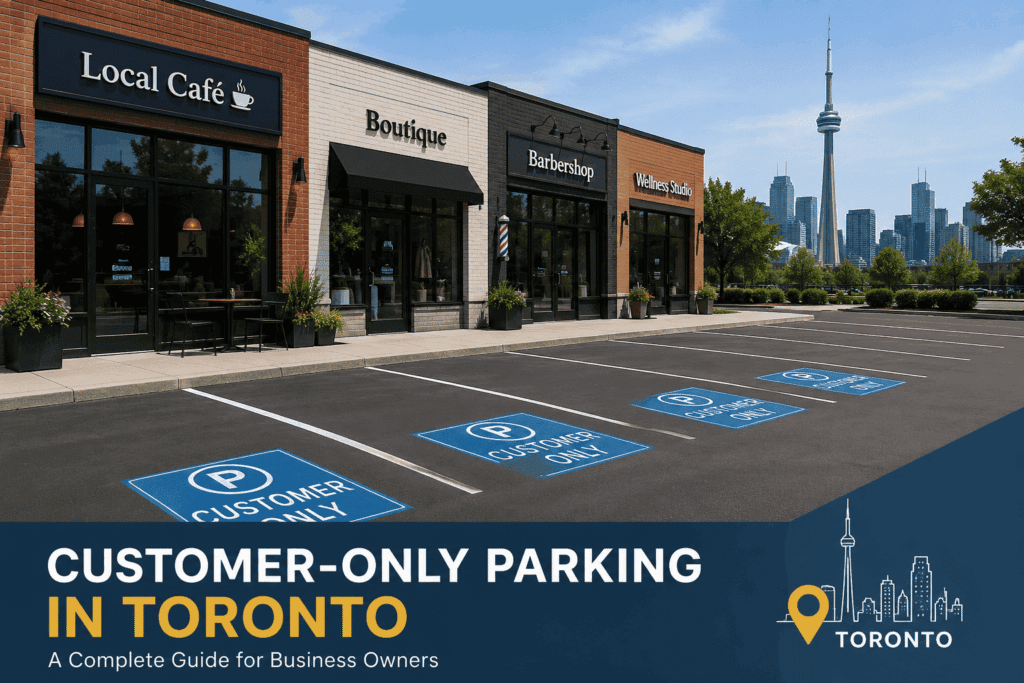
For a business, a parking lot is functional infrastructure — customers need to reach the door, deliveries need to reach the loading dock, and staff need somewhere to park during a shift. When any of that gets blocked by unauthorized vehicles, it becomes an operational problem, not just an annoyance. This article looks at when towing is actually the right call for a business.
Table of Contents
ToggleThe Core Question: Is It Costing You Something?
Not every parking violation is worth acting on. The useful question isn’t “is someone parked where they shouldn’t be” — it’s “is this actually costing the business something.” A car in an unused corner spot during a slow period is different from a delivery truck unable to reach the loading dock because a car is blocking it, or a customer who can’t find parking because non-customers have taken the whole lot.
Common Business Scenarios Where Towing Makes Sense
- Blocked loading docks or delivery access, where a single vehicle can delay operations for an entire business
- Customer parking taken over by non-customers, especially plazas near transit stops, event venues, or businesses without their own lot
- Employee parking abused after hours or by non-staff, particularly in mixed-use buildings
- Vehicles left for extended periods, well beyond any reasonable customer visit, effectively removing a usable spot indefinitely
In each case, the vehicle isn’t just inconveniently placed — it’s actively interfering with the business being able to operate or serve customers normally.
When Towing Might Not Be the Right First Move
Towing a customer’s own vehicle, even if they’ve technically overstayed a posted limit, can damage a relationship a business depends on. For situations involving actual or potential customers, a warning, a conversation with staff, or a grace period built into the parking policy often resolves things without the reputational cost of towing someone who might come back. Towing tends to make more sense for vehicles with no connection to the business at all — spillover parking, long-term abandonment, or a clearly outside vehicle.
Setting a Policy Before You Need One
Businesses that handle unauthorized parking well usually have a policy decided in advance, not improvised in the moment: what counts as a violation, how long a warning period lasts, and under what conditions towing gets authorized. Having this settled ahead of time also means staff aren’t left making judgment calls under pressure, and the business has a consistent standard if a towing decision is ever questioned.
Choosing a Towing Company for Ongoing Business Use
For businesses that expect to need towing more than a handful of times a year, it’s worth establishing a relationship with a towing company rather than starting from scratch each time. Confirming certification under Ontario’s current towing regulations, agreeing on transparent rates in advance, and setting up property towing as part of the business’s standard parking management makes the process faster and more consistent when it’s actually needed.
Weighing the Business Impact
Before authorizing a tow, it’s worth a quick gut check: does this genuinely protect the business’s operations or customer experience, or is it a minor irritation that isn’t worth the potential friction of towing someone’s vehicle? Businesses that reserve towing for real operational impact — blocked access, lost customer parking, genuine abuse — tend to get the benefit of the tool without the downside of feeling heavy-handed.
The Bottom Line for Businesses
Private property towing is most useful for a business when unauthorized parking is actively affecting operations or the customer experience, not simply present. Setting a clear policy in advance, reserving towing for situations that genuinely warrant it, and working with a properly certified towing company keeps the tool effective without becoming a source of unnecessary friction.
FAQs
Should a business tow a customer’s car for overstaying a time limit?
It depends on the situation, but many businesses use a warning or grace period for likely customers first, reserving towing for vehicles with no connection to the business.
What’s the clearest case for towing at a business property?
A vehicle blocking a loading dock, delivery access, or taking up most of the customer lot for non-customers are the clearest operational cases.
How can a business set a consistent towing policy?
Decide in advance what counts as a violation, how long a warning period lasts, and who on staff can authorize a tow, so decisions aren’t made ad hoc under pressure.
Does towing damage customer relationships?
It can, if it’s applied to an actual or potential customer. Reserving towing for clearly unrelated or abusive parking situations reduces that risk.
Is it worth setting up an ongoing relationship with a towing company?
For businesses that deal with unauthorized parking regularly, yes — it tends to mean faster response and more consistent rates than calling a different company each time.
 Call us at
  Email us at