Finding an unfamiliar car blocking your reserved parking spot is frustrating. So is discovering your own vehicle has been towed from a lot you thought was safe to park in. Private property towing sits at the center of both situations, and in Toronto, it’s governed by rules that many drivers and property owners still don’t fully understand.
At GTA Towing & Roadside Assistance, we handle private property tows across Toronto every week — from condo garages in the Entertainment District to strip mall lots along Eglinton Avenue. This guide breaks down how private property towing actually works, what your rights are, and how to avoid the most common headaches on both sides of the tow hook.
Table of Contents
ToggleWhat Is Private Property Towing?
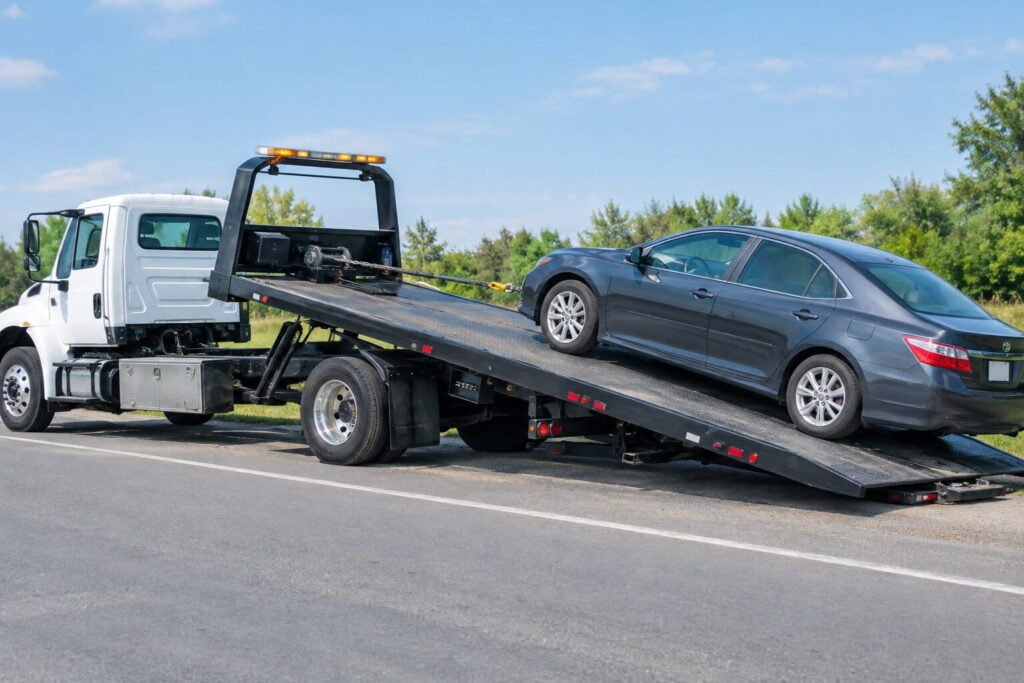
Private property towing happens when a vehicle is removed from land that isn’t a public road — think apartment complexes, retail plazas, office buildings, or condo parking garages. Unlike a tow ordered by police after a collision, this type of tow is typically requested by a property manager, landlord, or business owner who has the authority to control who parks on their land.
Common reasons a vehicle gets towed from private property include:
- Parking in a reserved or assigned spot without authorization
- Overstaying a posted time limit in a customer lot
- Blocking a fire route, driveway, or loading zone
- Parking without a valid permit in a residential complex
- Abandoning a vehicle on the property for an extended period
How Ontario Law Protects Drivers
Ontario overhauled towing regulation with the Towing and Storage Safety and Enforcement Act (TSSEA), which took full effect on January 1, 2024. Before this law, towing was governed by a patchwork of municipal bylaws, and enforcement varied widely from one city to the next.
Under the TSSEA, every tow operator working in Toronto — including those handling private property tows — must meet a consistent set of standards. Here’s what that means in practice.
Certification Is Mandatory
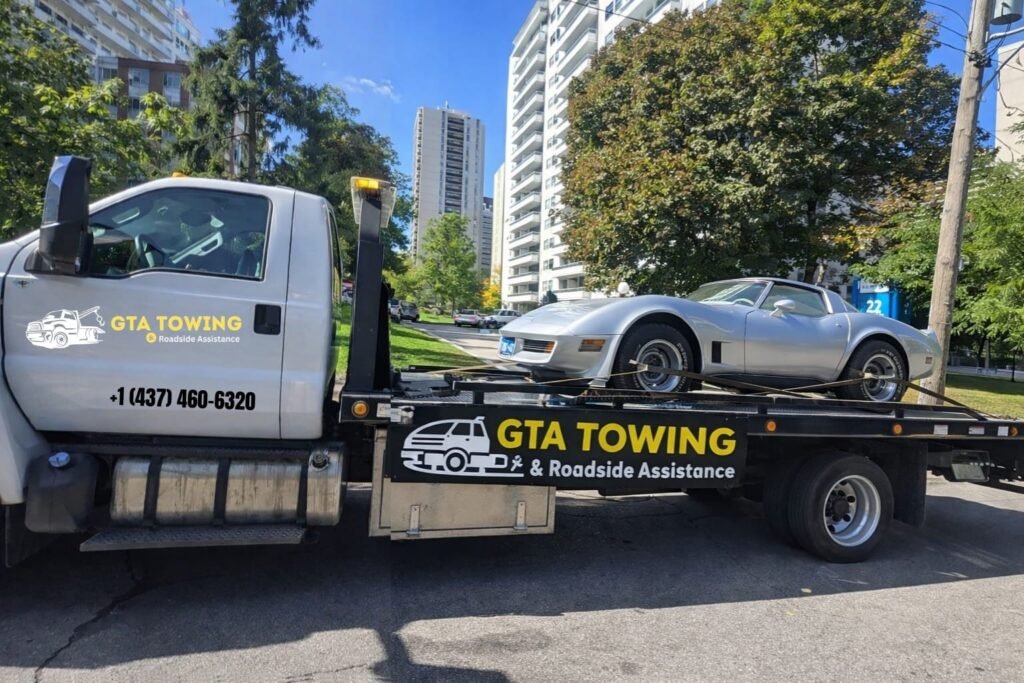
Every tow truck driver and storage facility operator must hold a valid provincial certificate. The truck itself must display the operator’s name and certificate number, and drivers are required to show proof of certification if asked.
Rates Must Be Transparent
Tow operators are required to publish their maximum rates and provide this information before work begins. A property owner requesting the tow, or the vehicle owner recovering their car, should never be surprised by hidden fees.
Personal Property Access
If your car gets towed, you’re entitled to retrieve personal belongings from inside it at no charge, usually during posted business hours or by appointment. A storage yard cannot hold your wallet, car seat, or work equipment hostage while you sort out payment for the tow itself.
Signage Requirements
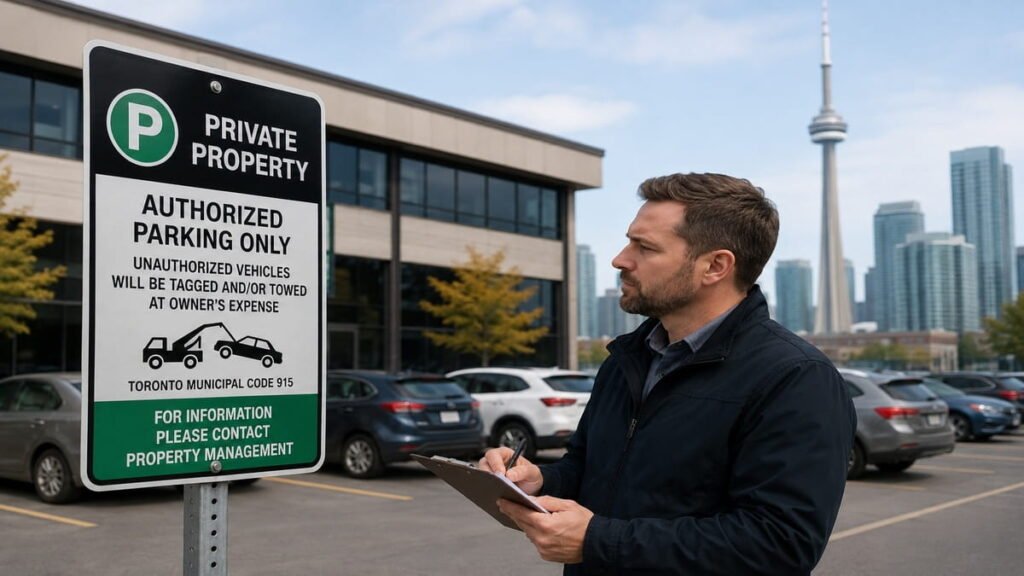
For a private property tow to be valid, the property generally needs clear, visible signage stating that unauthorized vehicles are subject to towing. This is one of the most overlooked details — and one of the most common sources of disputes.
Common Mistakes Property Owners Make
We’ve towed thousands of vehicles from private lots across the GTA, and the same avoidable mistakes show up again and again.
Skipping proper signage. A lot without clear, visible no-parking or tow-away signs creates a weak legal position if a driver disputes the tow.
Waiting too long to act. Property managers sometimes let unauthorized parking slide for weeks, which can complicate enforcement and frustrate tenants who follow the rules.
Choosing a tow company on price alone. An uncertified or poorly insured operator can expose a property owner to liability if a vehicle is damaged during the tow.
Not documenting the violation. Time-stamped photos of the vehicle in the unauthorized spot make disputes far easier to resolve.
Common Mistakes Drivers Make
Drivers run into avoidable trouble too, most often by:
- Assuming a “no parking” sign doesn’t apply after business hours
- Parking in what looks like an empty lot without checking for reserved spot markings
- Ignoring a final notice or warning sticker left on the windshield
- Ignoring the online complaint portal when they believe a tow was improper, instead of pursuing informal disputes that go nowhere
What to Do If Your Car Gets Towed From Private Property
If you return to find your vehicle missing, take these steps in order.
- Check for signage. Look for a sign in the area explaining towing rules — this often includes the towing company’s name and phone number.
- Call the number posted on-site, or contact the property management office if no towing information is visible.
- Ask for the certificate number and confirm the operator is licensed under the TSSEA before paying anything.
- Request an itemized invoice before you pay, so you know exactly what you’re being charged for.
- File a complaint with Ontario’s towing office if you believe the tow was improper or the charges exceeded posted rates.
Why Property Managers Choose a Licensed Towing Partner
For property managers and business owners, working with a certified towing company isn’t just about compliance — it protects the reputation of the property itself. A professional towing partner will:
- Respond quickly to reduce disputes and blocked spaces
- Carry proper insurance to cover any incidental damage
- Maintain accurate records of every tow, including time, location, and reason
- Communicate clearly with both the property manager and the vehicle owner
At GTA Towing & Roadside Assistance, our dispatch team documents every private property tow with photos and timestamps, which protects both the property owner and the driver if questions come up later.
Private Property Towing vs. Police-Ordered Towing
It’s worth understanding the difference, since the rules aren’t identical.
| Factor | Private Property Tow | Police-Ordered Tow |
|---|---|---|
| Who authorizes it | Property owner or manager | Police officer |
| Common reason | Unauthorized parking, expired permit | Collision, obstruction, safety hazard |
| Driver’s choice of company | Often no choice on-site | Sometimes no choice on-site |
| Signage required | Yes, in most cases | Not applicable |
Getting Your Vehicle Back Quickly
Storage fees typically accrue daily, so the sooner you retrieve your vehicle, the less it costs. Bring a valid ID, proof of ownership or insurance, and a method of payment. Most licensed operators, including our team, accept multiple payment methods and will walk you through the invoice before you pay.
Final Thoughts
Private property towing exists to keep parking fair — for tenants who pay for a reserved spot, for customers who need a spot to turn over, and for property owners managing a business. When it’s done right, with clear signage, transparent rates, and a licensed operator, it works the way it’s supposed to: quietly, fairly, and without drama.
If you manage a property in Toronto and need a reliable towing partner, or if your vehicle has been towed and you need help sorting it out, GTA Towing & Roadside Assistance is available to help. Call us for fast, TSSEA-compliant service across Toronto and the surrounding GTA.
Frequently Asked Questions
Can a property owner tow my car without warning in Toronto?
In most cases, yes, if the property has clear signage indicating that unauthorized vehicles will be towed. The signage itself typically serves as the warning.
How much does private property towing cost in Toronto?
Rates vary by operator, but Ontario law requires tow companies to publish maximum rates and disclose them before the vehicle owner pays. Always ask for an itemized invoice.
What should I do if I think my car was towed illegally?
Contact the towing company for documentation, then file a complaint through Ontario’s towing complaint portal if the tow appears to violate TSSEA rules, such as missing signage or excessive charges.
Do I have to pay before I can get my belongings out of a towed car?
No. Under the TSSEA, you’re entitled to retrieve personal property from your vehicle at no charge, generally during business hours or a pre-arranged time.
Can I choose which tow truck company removes my car?
For private property tows, the property owner or manager usually selects the company in advance. You generally don’t get to choose the operator on-site in this scenario.
Is signage legally required for private property towing in Ontario?
Yes, in most municipalities including Toronto, clearly posted signage is required for a private property tow to be considered valid and enforceable.
How quickly can a towed vehicle be released from storage?
This depends on the storage facility’s hours, but licensed operators are required to make reasonable arrangements for vehicle release, and many offer same-day pickup.
What information should a tow truck display in Toronto?
Every certified tow truck must display the operator’s name and TSSEA certificate number visibly on the vehicle.
Can a landlord tow a tenant’s car from an apartment complex?
Yes, if the tenant is parked without authorization, in an unassigned spot, or in violation of posted rules, and the property has proper signage in place.
Who regulates towing companies in Ontario?
Towing and vehicle storage services are regulated provincially under the Towing and Storage Safety and Enforcement Act, overseen by Ontario’s Ministry of Transportation.
 Call us at
  Email us at