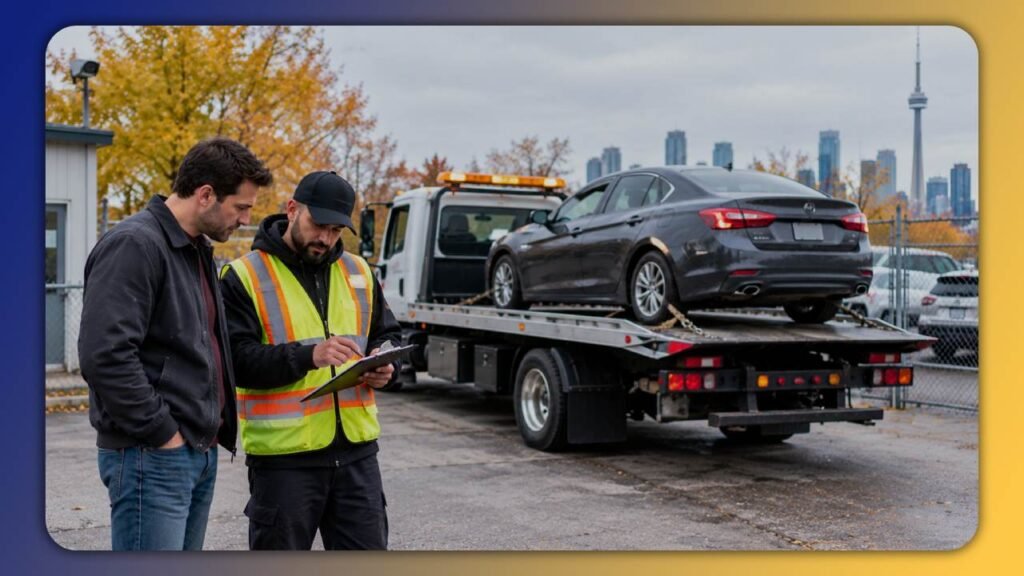
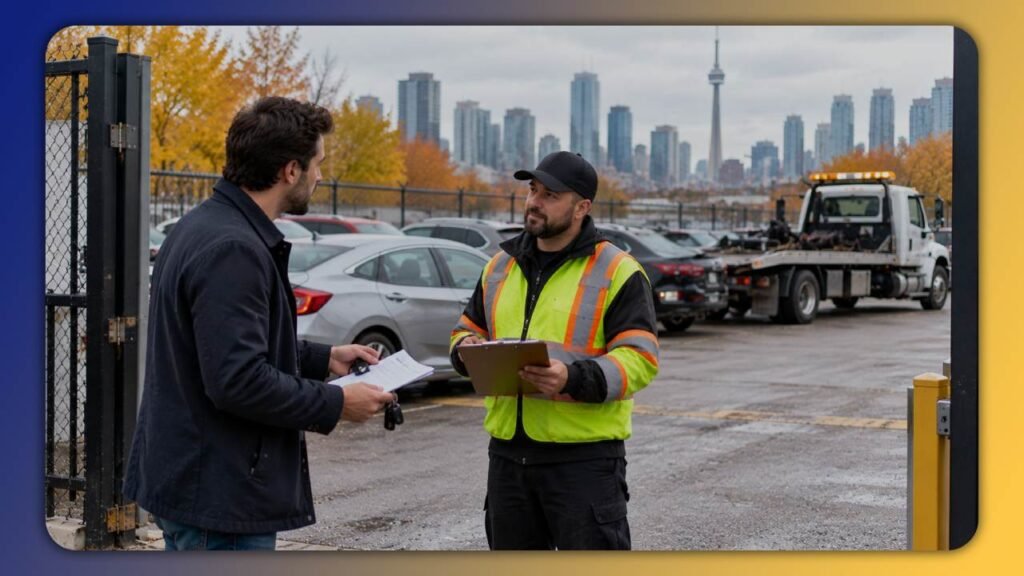
Call the Toronto Police Service at 416-808-2222, press 4, then 2, to locate your towed vehicle. Contact the towing company, confirm release requirements, and bring identification, ownership documents, and payment. If you are searching “get my car back after it is towed in Toronto,” start with the police lookup. Your vehicle might be at an impound yard or merely relocated nearby.
Act promptly because storage charges increase while the vehicle remains at the lot. Toronto Police lists separate procedures for locating vehicles and arranging retrieval. A police-ordered seizure also differs from an ordinary parking tow. Confirm the reason for removal before requesting a release form.
Table of Contents
ToggleGet My Car Back After It Is Towed in Toronto: First Actions
Start by locating the vehicle and confirming the towing authority. Toronto Police Service (TPS) maintains towing information for parking enforcement and police-directed removals. The dispatcher can identify a recorded impound or relocation. You need the precise address before visiting any storage facility.
How to Confirm Your Vehicle’s Location
To confirm your vehicle’s location, call 416-808-2222, select 4, then select 2. Tell the dispatcher your Ontario licence plate and last parking address. Record the company’s name, yard address, and telephone number. Ask whether officers ordered an impound or moved your vehicle for parking enforcement.
Check surrounding streets when police report a relocation rather than a storage impound. A rush-hour traffic restriction sometimes results in nearby relocation. Do not pay an unknown caller who claims to possess your car. Verify the operator through the police dispatcher first.
How to Record the Tow Details
To record the tow details, write the removal date, discovery time, and last known parking location. Photograph any remaining signs, parking ticket, and curb markings. Save the dispatcher’s reference details and the storage facility’s name. A clear timeline supports fee reviews and towing complaints.
Call the identified operator before leaving home. Ask for opening hours, release requirements, accepted payment methods, and any active police hold. Also request the scheduled storage charge and the time the next storage period begins. A quick confirmation prevents repeated trips and extra costs.
The Three Main Types of Towing in Toronto
Toronto drivers face 3 common removal situations: parking enforcement, police seizure, and private-property towing. Each situation involves different authority and paperwork. Identify the correct category before paying for transport or preparing documents.
Rush-Hour Relocation and Parking Enforcement
Toronto enforces rush-hour routes and posted parking restrictions to keep traffic moving. Enforcement personnel sometimes relocate cars instead of storing them. A relocated car can remain on a nearby permitted street. Contact TPS first to establish whether a storage yard actually holds your vehicle.
Parking tickets and towing charges are separate issues. Toronto’s habitual parking offender program also uses towing for qualifying repeated unpaid violations. City guidance says drivers need not settle outstanding parking violations merely to retrieve those vehicles. You still owe applicable towing and storage charges for release.
Police Seizure and Impoundment
Officers can order vehicle impoundment following specified driving offences or other legal circumstances. Examples include stunt driving, impaired driving offences, and certain suspended-licence situations. An enforced hold prevents release until the authorized period ends. Calling the yard cannot override a police or statutory detention.
Some police seizures require an authorization or release document. The exact procedure depends on the incident and policing agency. Ask TPS whether a release form applies to your particular vehicle. Do not assume a parking tow follows the same steps as a criminal investigation.
Private-Property Towing and Consent
Private-property removal can occur at apartment parking spaces, shopping centres, or managed visitor lots. The property authority and applicable rules determine the removal process. Ask the tow operator who ordered the removal and where the vehicle went. For context, review Toronto private property towing before arranging any additional move.
Ontario generally requires customer consent for a requested tow. Police-directed or otherwise authorized impoundments have exceptions. A driver cannot simply refuse an authorized removal by withholding consent. Check the source of authority instead of assuming every tow requires your signature.
Documents to Get My Car Back After It Is Towed in Toronto
Bring government-issued identification, evidence of vehicle ownership, and any release document the responsible authority requires. Confirm requirements with the specific lot first. Police holds, lease arrangements, and corporate ownership can change the paperwork you need.
Ownership Records and Identification
Take your driver’s licence or another accepted government photo identification document. Bring the vehicle permit or registration information that identifies the registered owner. A current insurance slip can help staff confirm vehicle details. Ask the facility whether a digital document meets its identification rules before arriving.
Match the licence plate, vehicle identification number (VIN), and owner name against the yard’s records. If you recently purchased the vehicle, explain any missing registration updates. Bring the bill of sale and supporting paperwork for verification. Never assume another person’s name automatically authorizes release.
Police Release Forms and Representative Pickup
Request a police release only after the relevant authority confirms that you need one. Peel and Halton police describe formal release slips for specific seized vehicles. Toronto procedures depend on the reason for removal. The Toronto tow yard should confirm the exact requirement for your case.
If the owner cannot attend, contact the operator about authorized pickup. The lot can specify its requirements for written permission and identification. Bring the authorization before leaving for the yard. Separate owner authorization from permission to drive; the person driving away also needs valid licensing.
How to Recover a Vehicle From a Toronto Impound Lot
To recover a vehicle from a Toronto impound lot, contact the operator and satisfy the release conditions. Finish all verification before paying a new towing provider. Storage operators must make reasonable efforts to arrange prompt release during business hours.
How to Confirm the Lot’s Release Conditions
To confirm the lot’s release conditions, phone the correct facility and give your licence plate. Ask the attendant to verify the address and available pickup window. Find out whether an officer imposed a hold, whether the owner must attend, and which identification is acceptable.
Request the current itemized amount, the next daily storage cutoff, and accepted payment methods. Ontario towing rules recognize credit card, debit card, and cash payment choices. Ask for a receipt after payment. Do not rely on an informal price estimate when the operator has a published maximum rate.
How to Inspect the Car Before Leaving
To inspect the car before leaving, photograph all 4 sides, wheels, bumpers, and visible interior surfaces. Compare current damage against earlier photos whenever available. Note missing belongings, fresh scratches, or flat tires on the pickup paperwork. Tell the attendant about disputed damage immediately.
Check whether the vehicle starts, steers, and brakes safely before driving. Avoid driving when an accident damaged suspension, steering, or tires. Arrange safe flatbed towing services to move an undriveable vehicle to a repair facility you choose. Get the new towing quote before authorizing collection.
Toronto Towing Charges and Storage Fee Rules
Toronto Police publishes contract towing and storage charges for its contracted operators. The amounts vary by company and vehicle category. A private tow quote is not the same as a police-contract impound charge. Check the operator and rate category shown on your paperwork.
Police Contract Rates for Standard Passenger Vehicles
The current TPS towing page lists standard police-contract tow charges of CAD $250 to $400 across 4 providers. Standard-length storage charges appear as CAD $75 to $100 per 24 hours. These examples apply to listed Toronto Police contractors, not every private tow or incident.
TPS assigns vehicle categories using gross vehicle weight rating (GVWR). The standard tow category covers vehicles below 7,004 pounds (3,177 kilograms). Standard storage length covers vehicles up to about 21.3 feet (6.5 metres). Verify the contractor’s specific published line before calculating a bill.
GTA Towing & RSA also publishes a separate Toronto flatbed cost guide. That guide describes CAD $150 to $350 as an estimated local flatbed market range. The estimate does not replace a written quote. Police-contract storage rates and independent transport prices belong in different comparisons.
Storage Timing and Invoice Review
Toronto Police calculates the first storage day in hourly portions of a 24-hour period. The police page says each subsequent 24-hour period begins with a full day’s charge. Record the vehicle’s arrival time, not only the day you discovered the tow. Ask when the next billable period starts.
Review the invoice before payment. Check the basic tow, storage duration, applicable recovery work, and any additional charges. Ontario rules prohibit charges above an operator’s published maximum rates. Request clarification on unfamiliar fees instead of treating every addition as automatically valid.
A storage operator can retain a vehicle for lawful unpaid charges under applicable lien rules. An invoice dispute does not automatically cancel the obligation. Keep receipts, rate screenshots, and written correspondence for any complaint. Never assume paying the impound bill settles a separate parking penalty.
Personal Property Access and Ontario Consumer Rights
Vehicle owners can generally access personal belongings for free during the storage company’s regular hours. Police can restrict access in specific circumstances. Bring identification, identify the items you need, and ask the attendant for the earliest permitted entry.
Access to Belongings Before Vehicle Release
Ontario protects access to personal property such as wallets, medicine, school bags, and work equipment. Storage operators generally cannot charge for retrieving personal belongings during regular business hours. Police restrictions override ordinary access when investigators need to preserve evidence.
Ask staff to record any refusal and provide the reason. Confirm whether the owner must attend personally or can authorize a representative. Keep the conversation professional and ask for written confirmation. Retrieving belongings and obtaining the vehicle’s full release are different requests.
Complaints About Rates and Towing Conduct
Ontario’s Ministry of Transportation (MTO) accepts reports concerning certified towing or storage businesses. Concerns include missing rate disclosures, refusal of eligible property access, and inappropriate conduct. Save the consent document, invoice, receipt, truck details, and dated photographs before filing a complaint.
Toronto Police also provides contact channels for concerns about its contract towing services. Use the police contract contact for issues involving a police-arranged tow. Use provincial towing oversight for relevant operator conduct. A parking ticket dispute uses the City of Toronto’s separate parking review process.
Police Holds and Vehicles That Cannot Be Driven
A legal impound hold prevents release even when you can pay the bill. Check the detention reason with the ordering police agency. Do not confuse the towing company’s collection hours with the legally permitted release date.
Statutory Holds and Early Release Requests
Ontario lists 7-day, 14-day, and 45-day impound periods for distinct driving violations. Specific circumstances and applicable legislation determine the actual duration. Ask police for written notice, the start date, and release eligibility. A tow operator cannot shorten a statutory hold on request.
The provincial government describes limited appeal routes for certain 45-day cases. Those rules do not create a universal appeal for every impound. Contact the responsible police service about the specific detention. Record its answer and any case reference before visiting the yard.
Safe Collection of an Unroadworthy Vehicle
Do not drive a vehicle with invalid registration, no insurance, or unsafe mechanical damage. You can collect a released car without driving it yourself. Arrange an appropriately licensed driver or qualified towing service when necessary. Confirm that the vehicle has no active police restriction before scheduling pickup.
For all-wheel-drive vehicles, confirm transport requirements with the vehicle manufacturer or a qualified operator. A flatbed often keeps all 4 wheels off the roadway. Photograph loading equipment and securement points before departure. A second tow requires its own agreed price and destination.
A Practical Vehicle Release Checklist for Toronto
Use the following tasks to reduce repeat visits. The timing column describes your action priority, not a guaranteed police response or yard service time. Difficulty reflects the number of steps, not a legal classification.
|
Task |
Timing | Method |
Difficulty |
| Locate the vehicle | Immediately | Call TPS; provide plate and location | Easy |
| Confirm the tow category | Before visiting | Ask about relocation, parking tow, or police hold | Easy |
| Gather pickup documents | Before departure | Bring ID, ownership, and required release | Moderate |
| Verify charges | Before payment | Request itemized total and rate schedule | Moderate |
| Inspect and collect | At pickup | Photograph condition; arrange lawful transport | Moderate |
Treat the first telephone call as your starting point. A vehicle might appear missing because police relocated the car only a short distance. Do not arrange a recovery truck until the dispatcher or tow operator confirms the actual vehicle location.
Before departing, write a 5-item pickup checklist: photo ID, ownership record, required police release, payment method, and the confirmed address. Add an authorized driver’s information when you cannot drive. Recheck opening hours during weekends and holidays.
Preventing Another Tow After Release
Toronto motorists reduce repeat towing by checking signs, permit conditions, and traffic restrictions before parking. Rush-hour signs can prohibit parking during specified hours. Read the exact posted times even when other vehicles remain along the same curb.
Check visitor parking rules at condominiums, medical centres, and retail plazas. Obtain written visitor authorization when the operator requires registration. Keep your licence plate details current with the parking administrator. Remove the car before a permit or temporary exemption ends.
Review unpaid parking penalties through the City’s official channels. Toronto’s habitual offender towing process considers qualifying unpaid violations after specific time thresholds. Do not depend on an informal warning before removal. Resolve genuine account issues directly through the issuing authority.
When your vehicle breaks down, move to a safe location if possible. On restricted provincial tow-zone highways, follow the designated dispatch process. Ontario advises drivers to call 511 from a safe location for non-emergency tow-zone help. Use 911 for emergencies or immediate roadway danger.
Frequently Asked Questions
Can I get my car back the same day after a Toronto tow?
Yes, when the vehicle has no legal hold and the operator can complete the required release. Call first to confirm documents, payment, and business hours.
Do I always need a police release form in Toronto?
No. A routine parking tow and a police seizure have different requirements. Ask the ordering authority whether your case needs a release document.
Can I collect personal belongings without paying the full tow bill?
Yes, generally during regular storage-yard hours, subject to police restrictions. Present valid identification and request access to personal belongings separately from vehicle release.
Will my insurance pay the towing and impound fees?
Not automatically. Coverage depends on your policy, the reason for the tow, and applicable endorsements. Ask your insurer before assuming reimbursement.
Can somebody else pick up my towed car in Toronto?
Yes, when the yard accepts owner authorization. Confirm identification, written consent, and driver licensing before sending a representative.
A Clear Route to Getting Your Vehicle Back
To get my car back after it is towed in Toronto, first confirm its location and the tow category. Call Toronto Police first when the car’s location is unknown. Get the storage operator’s itemized fees, collect your documents, and arrange lawful transport. When the released car cannot drive safely, request Toronto car towing services from GTA Towing & RSA. Obtain a written quote before dispatch.
 Call us at
 Email us at