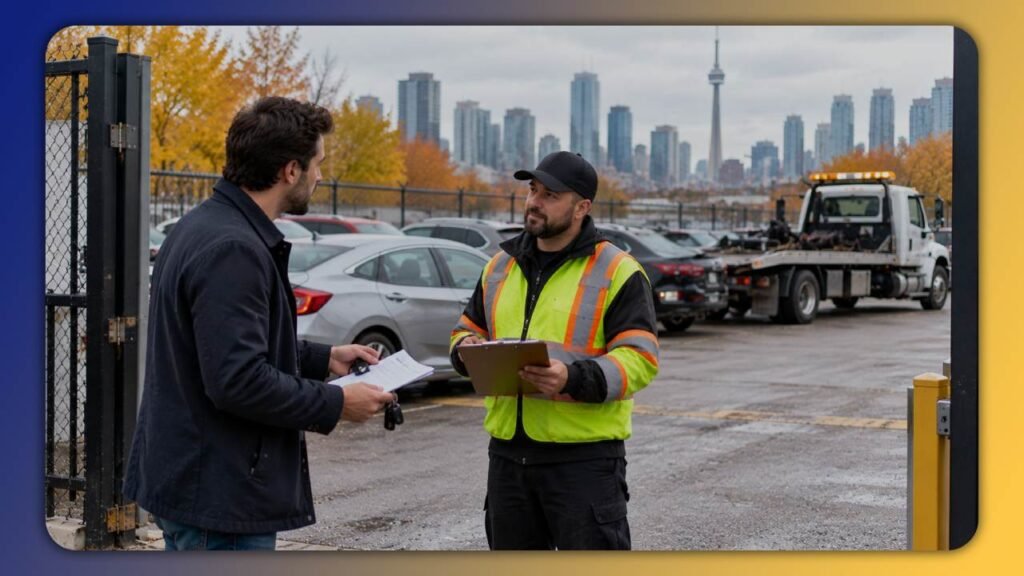
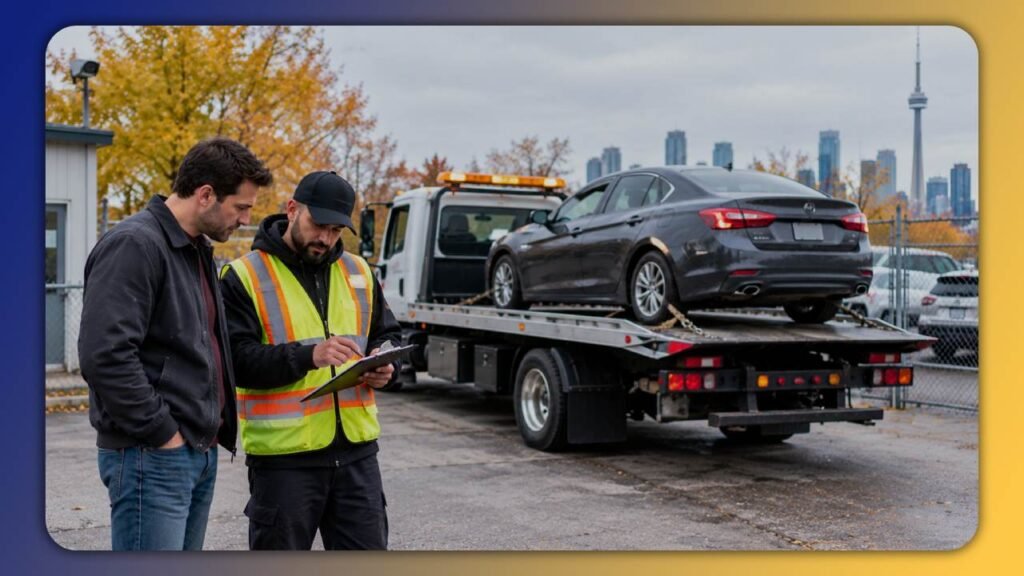
Yes, you have rights when your car is towed in Ontario, including consent, rate information, vehicle access and an itemized invoice. Police-directed impounds and restricted tow zones create important exceptions to your choices.
Knowing what happens when your car is towed in Ontario helps you locate your vehicle and challenge improper charges. Act promptly because storage charges can increase while your vehicle remains at the yard.
Table of Contents
ToggleYour Immediate Rights After an Ontario Tow
You can identify the towing company, request published rates and obtain documentation. Ontario requires tow operators and vehicle storage businesses to hold provincial certificates unless an exemption applies. Ask the driver for a certificate and check the company name on the truck.
Ontario introduced province-wide oversight under the Towing and Storage Safety and Enforcement Act (TSSEA) on January 1, 2024. The legislation covers consent, conduct, storage, billing and consumer complaints. Your exact rights depend on who ordered the tow.
Keep 3 facts separate: the reason for removal, the towing authorization and the storage location. A police impound, unauthorized parking removal and voluntary roadside tow follow different processes. Ask the person directing the removal to identify the legal reason.
When your car is towed in Ontario, a storage facility cannot simply conceal the vehicle’s location. Storage operators must take steps to tell the owner where the vehicle is held and explain retrieval arrangements.
How to Locate Your Towed Vehicle in Ontario
Start with local police or parking enforcement when your vehicle disappears from its parking space. Check your plate number, the last parking address and any notices. Do not immediately assume theft or arrange another tow.
Toronto Police Relocation and Impound Lookup
Call the Toronto Police Service non-emergency number, 416-808-2222, for a suspected Toronto impound. Follow the towing enquiry prompts and provide your plate number and last known parking location. Dispatch can check whether police relocated or impounded your vehicle.
Record the lot name, street address, reference number and opening hours. Call the storage yard before travelling. Ask which documents and release authorization the operator requires. Toronto Police notes that accumulating storage fees make prompt action worthwhile.
Police Releases Outside Toronto
Contact the local police service for the municipality where authorities removed your vehicle. Halton Regional Police, for example, describes a tow-release slip procedure. Registered owners can request a release and present identification at the designated compound.
Do not assume every municipality uses the same release form. A police seizure, municipal parking tow and private tow can involve separate approvals. Ask whether an officer must release the vehicle before you pay the operator.
Consent Rules When Your Car Is Towed in Ontario
You ordinarily choose the towing operator and destination for a voluntary tow. A police-directed tow or a restricted highway tow zone limits your choices. Never accept an unsolicited driver’s statement without checking who authorized the service.
Owner-Authorized Tows and Signed Consent
For a normal consumer tow, the operator must explain your rights and maximum rate schedule before seeking consent. The operator must document authorization and supply the required copy. Read the destination address before you sign.
Do not sign a blank consent form. Check the tow operator’s certificate number, driver details and agreed destination. An operator cannot bill for a tow that legally required consent but lacked that consent. Other statutory exemptions can apply.
Choose a repair shop, dealership or home address that fits the situation. The operator must follow the most direct route to your chosen destination. Ask about restrictions before requesting service on a controlled-access highway.
Police-Directed and Restricted-Zone Tows
Police officers and authorized officials can direct removal without your ordinary consent in qualifying circumstances. Examples include impoundments, traffic hazards and some parking enforcement removals. A restricted tow zone can also limit which operator responds.
For a collision on a Toronto street, follow Toronto Police collision-reporting directions before choosing a repair destination. Toronto Police instructs vehicles towed from collision scenes to proceed to a collision reporting centre. Police or collision centre staff can clarify the local process.
Ask for the officer’s name, badge number and incident reference. The record distinguishes lawful enforcement from an unauthorized solicitation. Do not interfere with a necessary roadway clearance.
Your Rights at an Ontario Vehicle Storage Yard
You can request reasonable vehicle access and timely release once lawful release conditions are met. A storage operator must explain the facility location and retrieval process. Operators generally allow access during regular business hours, subject to police restrictions.
Vehicle Release and Proof of Ownership
Call the storage yard and request its release checklist before arriving. Bring government photo identification, vehicle registration or ownership documents, and any police release slip. Ask whether the yard accepts an authorized representative.
The yard must make reasonable efforts to arrange prompt release during business hours. After-hours release arrangements depend on the operator and legal requirements. A valid lien can permit the yard to seek payment before releasing a vehicle.
Inspect visible damage before driving away. Photograph bumpers, wheels, windows and underbody areas when safely accessible. Record the date, time and employee name. Keep receipts and the signed release document together.
Personal Property Access and Storage Notice
You can generally collect personal belongings during the yard’s normal business hours at no charge. Examples include a wallet, work laptop and medication. Police can restrict access during an investigation.
Storage operators must take steps to notify owners about location and retrieval. Ontario guidance explains a 15-day notice-related limit in many cases. The limit concerns specified storage charges when the operator fails to notify within the required period; exceptions exist.
Do not treat the 15-day rule as a free-storage period. Ask the operator for arrival time, its notification record and the daily billing method. Address disagreements immediately to avoid further charges.
Towing Rates, Storage Charges and Billing Rights
You have the right to see an operator’s maximum rate schedule before a consent-based tow. Operators must publish maximum rates with Ontario and display applicable schedules. A quoted amount cannot exceed the operator’s published applicable maximum.
Maximum Rate Schedules and Market Estimates
GTA Towing & RSA publishes a flatbed towing price guide with $150–$350 as a typical Toronto local flatbed market estimate. The page lists estimated hook-up costs and distance charges. These figures are market guidance, not a fixed GTA Towing & RSA quotation.
The final price depends on vehicle type, travel distance, access and recovery equipment. Request a written quotation and the operator’s maximum rate schedule. Separate towing from storage, winching and third-party recovery costs.
Toronto Police publishes separate police-contract tow and storage schedules. Those contractor rates do not automatically apply to every private tow. Compare the invoice against the actual operator’s filed maximum rate, not a generic citywide average.
Itemized Invoices and Payment Methods
You must receive an itemized invoice before the operator requests payment. Check the starting location, destination, service date, vehicle information and individual charges. Ontario also requires operators to accept multiple payment methods, including cash, debit and credit.
Request a receipt immediately after paying. Ask the operator to explain any surcharge, additional truck, storage day or equipment fee. Keep the invoice for insurance reimbursement or a regulatory complaint.
An insurer can review coverage for accident-related towing and storage. Insurance reimbursement does not remove your responsibility to examine the paperwork. Never sign a repair authorization merely to receive towing service.
Private Property and Parking Enforcement Tows
A property owner’s complaint does not automatically make every private-property tow lawful. Municipal parking requirements and provincial towing rules both matter. Toronto applies specific enforcement procedures for removing vehicles from private property.
Toronto property managers can review private property towing guidance for business-side parking enforcement requirements. The site describes authorization, signage and municipal steps for Toronto properties. Vehicle owners should independently confirm enforcement records with the issuing authority.
Ask for the parking infraction details, tow authorization, destination and time of removal. Photograph the signs when you return to the location. Different municipalities apply different private-property enforcement procedures, so avoid assuming Toronto’s process applies everywhere.
When your car is towed in Ontario from a condominium or plaza, distinguish a genuine parking enforcement removal from a private operator’s voluntary request. The classification affects consent and the correct complaint route.
How to Challenge an Improper Ontario Tow
To challenge an improper Ontario tow, collect documents first and report the operator to the correct authority. A dispute over the ticket follows a different path from a complaint about driver conduct or towing charges.
Evidence Collection and Ministry Complaints
Keep the consent form, maximum rate schedule, tow invoice, receipt, photographs and messages. Record the company’s name, certificate numbers, departure point and destination. Save camera footage when available.
Report suspected provincial towing-rule violations through the Ontario Ministry of Transportation complaint process. Provincial oversight addresses relevant conduct from January 1, 2024 onward. Explain the disputed event clearly and attach supporting documents.
Contact municipal parking enforcement to challenge the underlying parking ticket through the applicable process. Contact police about theft, threats or another suspected criminal offence. An administrative towing complaint does not replace emergency police assistance.
Disputes About Damage or Storage Bills
Photograph suspected towing damage before repairs when possible. Request the operator’s incident documentation and preserve inspection records. Contact your insurer for coverage and claims guidance if the vehicle suffered collision damage.
Dispute unfamiliar storage charges in writing. Request entry and exit timestamps plus the posted maximum daily rate. Ontario’s Repair and Storage Liens Act can affect possession and payment disputes, so seek legal guidance for complicated liens.
Do not ignore accumulating storage fees while disputing a charge. Ask about practical release options and preserve any disputed amount in writing. A prompt written record improves the reliability of your complaint.
Vehicle Recovery After a Collision or Breakdown
Call emergency services first when people face injury or an immediate traffic danger. For a non-emergency breakdown, contact a certified towing operator or your roadside assistance provider. Confirm whether a restricted highway tow zone affects dispatch.
For damaged vehicles, ask about safe transport and a documented destination. Certified operators should explain handling choices before loading your vehicle. Get itemized paperwork and request a destination that meets local collision-reporting rules.
Before a tow, photograph the vehicle and remove accessible valuables. Tell the operator about a locked wheel, damaged suspension or low ground clearance. A flatbed, dollies or a winch can address different recovery needs.
Ask whether your insurer requires a collision reporting centre visit. Local police requirements can control the immediate destination after a crash. Protect the scene and avoid entering active traffic to take photographs.
When your car is towed in Ontario after a collision, request the driver’s certification details and the complete consent document. Confirm the towing destination before leaving the scene.
Practical Checklist for a Towed Car
Use the checklist below in order, starting with location and authorization. Complete the first 2 steps before making payment arrangements. Document all instructions and save copies in your phone.
| Task | Timing | Method |
Difficulty |
| Locate vehicle | Immediately | Call local police; give plate and location | Easy |
| Check authorization | Before payment | Request tow reason and certificate | Easy |
| Confirm storage | Same day | Call yard; obtain address and hours | Easy |
| Review charges | Before payment | Compare invoice with posted rates | Moderate |
| Retrieve property | Business hours | Bring ID; request personal items | Easy |
| Arrange release | As soon as permitted | Bring ownership and any release slip | Moderate |
| Report concerns | Promptly | Send evidence to proper authority | Moderate |
Keep 1 folder for each tow. Include photographs, the consent form, rate schedule, invoice, release slip and relevant insurance correspondence. Consistent documentation makes disputes easier to review.
Check the storage yard’s billing cycle before delaying collection. Toronto Police explains that storage days follow 24-hour periods for its listed contracts. A private provider’s applicable published schedule still controls its lawful charges.
Insurance, Impound Records and Release Delays
Contact your insurer when collision damage caused the tow. Supply the collision reference, storage location, towing receipt and any photographs. Ask whether your policy covers towing, storage or transfer to an approved repair facility. Coverage varies by policy and claim circumstances.
Insurance coverage does not determine whether a tow operator followed Ontario consumer rules. A legal bill and an insured expense are separate questions. Ask the insurer for written confirmation before authorizing further storage or repairs.
Vehicle Ownership and Third-Party Collection
A registered owner can usually organize release directly after meeting the operator’s requirements. A relative, employer or insurance representative can face additional authorization checks. Ask the yard which identity and permission documents are acceptable before arranging pickup.
For a financed or leased vehicle, contact the lender or leasing company when the release requires ownership approval. Request an explanation of any outstanding police hold. Do not drive a vehicle that remains legally prohibited from road use.
Police Holds and Vehicle Condition
Police can retain a vehicle for an investigation or a prescribed impound period. A storage yard cannot override a lawful police hold simply because you pay the towing invoice. Request the incident reference and release instructions from the responsible police service.
Check the car’s roadworthiness before collecting the keys. Ask about tire damage, broken lights and fluid leaks. Arrange legal transport if the vehicle cannot travel safely. A second tow should use new consent and clear pricing unless another exemption applies.
When your car is towed in Ontario, clear records reduce unnecessary trips. Record the names of the police contact, insurer and storage representative. Confirm opening hours, acceptable payments and vehicle condition before travelling.
Warning Signs During a Towing Dispute
Treat pressure to sign blank forms or accept an unknown destination as a warning sign. Ask drivers to show certification and explain the rate schedule. Avoid signing repair, storage or legal referral documents without understanding their purpose.
Watch for 3 examples of questionable conduct: an unexplained destination change, a higher invoice than the stated maximum rate and pressure to use a particular repair shop. Preserve written evidence instead of arguing beside traffic.
A tow operator should not solicit unrelated services or direct you to legal and healthcare providers. Ontario’s code of conduct also restricts improper financial referrals. Ask for every referral relationship to be disclosed before selecting a repair business.
A driver arriving before your requested operator does not automatically prove misconduct. Check whether police dispatched the driver, whether the location falls inside a restricted tow zone and whether consent is required. Independent verification protects you from both mistakes and scams.
When your car is towed in Ontario, report specific conduct rather than assumptions. Attach dated photos, receipts and the operator’s certificate details to any formal complaint. Police and provincial regulators need different evidence for different allegations.
Frequently Asked Questions
Can a tow truck take my car without permission in Ontario?
Yes, in defined circumstances. Police or authorized officials can direct certain impounds. Ordinary voluntary tows generally require consent.
Can I choose where my car goes after a tow?
Yes, for a normal voluntary tow. Police directions, collision reporting procedures and restricted zones can limit your destination choices.
Can a storage lot stop me from collecting belongings?
Generally, no. Owners can access personal items during regular business hours without an access fee, unless police restrictions apply.
Do I have to pay towing fees before collecting my car?
Often, yes. An operator with a valid lien can require payment before vehicle release. Request an itemized invoice first.
Can I report an Ontario towing company for overcharging?
Yes. Send the Ministry of Transportation your invoice, published rate evidence, operator details and a clear complaint description.
Protect Your Rights and Arrange a Lawful Tow
Act quickly, verify the operator and keep every document when your car is towed in Ontario. Confirm the lawful authority, compare published rates and request timely release. For accident transport across the Greater Toronto Area, request accident towing support services and obtain a situation-specific written quote before any voluntary tow.
 Call us at
 Email us at