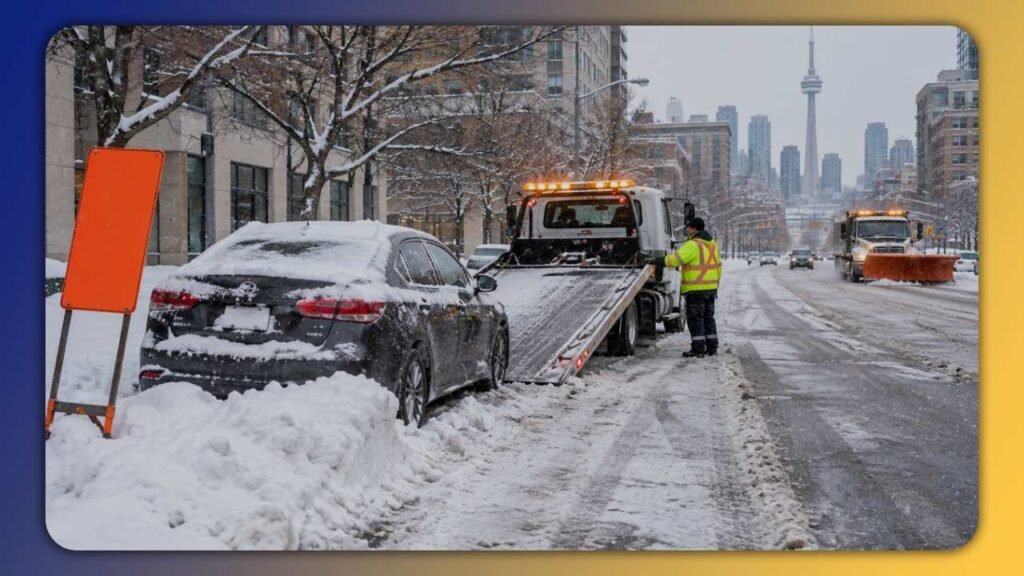
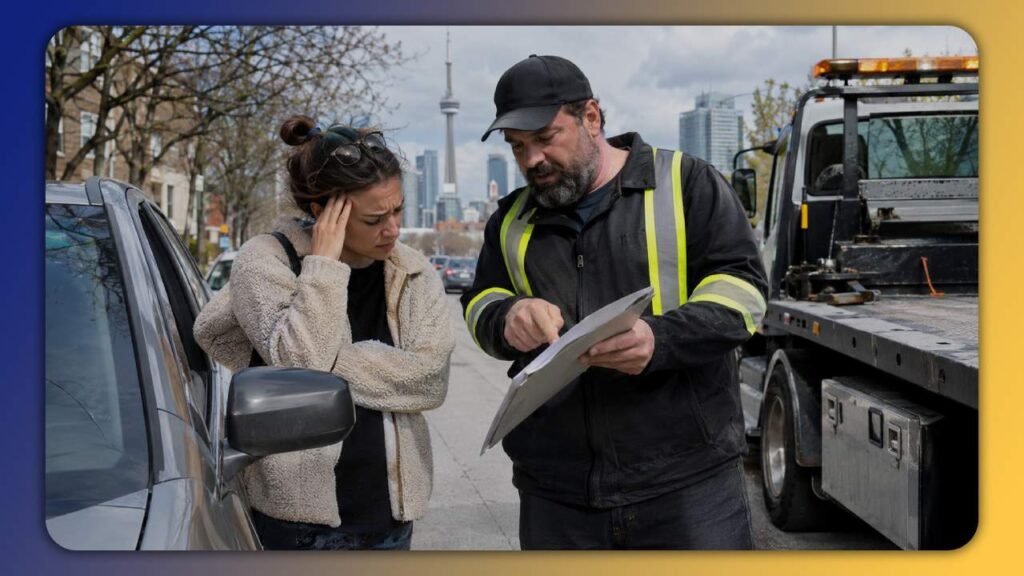
A towing scam in Toronto often starts with an uninvited driver, hidden charges, or pressure to sign incomplete paperwork. Verify the operator’s certificate, review the rate schedule, and approve the destination before your vehicle moves. Your first priority remains roadside safety. Ontario offers specific protections, but police-directed towing and restricted highway zones follow different rules.
Table of Contents
ToggleTowing Scam in Toronto: 3 Immediate Warning Signs
Treat unsolicited offers, missing identification, and sudden price changes as warning signs. One warning doesn’t prove fraud. However, you should pause an ordinary tow until you can verify the company and documents. A towing scam in Toronto usually exploits the stress following a crash, breakdown, or unexpected vehicle removal.
Uninvited Trucks and Unverified Dispatch Claims
An unknown driver approaches your disabled vehicle and claims an insurer or police officer sent the truck. Ask who dispatched the operator, then verify that claim through your own insurer or attending officer. Don’t accept the driver’s phone number as proof. A towing scam in Toronto sometimes starts before the stranded driver even asks for help.
Pressure to Sign Blank or Broad Forms
A driver demands your signature without showing a destination, company details, or full service description. Never sign a blank consent form or an unrelated repair authorization. Read the whole document and photograph every page. A towing consent does not automatically mean you authorized bodywork, storage, or additional repairs.
Unexpected Charges and Cash-Only Demands
A caller promises a low total, but the driver adds unexplained hookup, labour, or mileage charges. Ask the operator to identify the applicable published maximum rate and each service performed. Ontario forbids fuel surcharges and requires invoices for chargeable towing services, subject to exemptions. A cash-only demand deserves verification because operators must offer multiple payment methods. A towing scam in Toronto often hides its payment trail.
Towing Scam in Toronto: Your Ontario Consumer Rights
You normally choose your operator and destination, and a driver must obtain your consent before towing. Ontario’s Towing and Storage Safety and Enforcement Act (TSSEA) governs towing and vehicle storage. A police-directed removal or restricted towing zone changes parts of the normal process. Understanding those exceptions helps you recognize a towing scam in Toronto without delaying legitimate emergency clearance.
Government Certificates and Truck Identification
Ontario requires towing operators and tow drivers to hold valid provincial certificates, unless an exemption applies. The tow truck must display the operator’s name and certificate number. Ask the driver to show their individual certificate. Compare the company name with the consent form, invoice, and official provincial records. A mismatched identity raises a serious concern.
Your Consent and Destination Choice
The driver must show the maximum rate schedule and customer rights before requesting ordinary towing consent. Review the destination address and certificate details on the form before signing. Request your copy before the truck leaves or immediately afterward, as provincial rules require. You choose the drop-off location, except where police or restricted-zone rules apply. Never authorize an unfamiliar storage yard by accident.
Payment, Invoices, and Vehicle Access
A towing operator must provide the required invoice before demanding payment for a chargeable tow. Compare each invoice line with the service performed and the published operator rates. Ontario protects reasonable access to your vehicle and personal belongings, subject to specific restrictions. Storage operators must explain the location and applicable retrieval process. Keep every receipt, consent copy, and payment record.
Restricted Highway Tow Zones Across the GTA
Only authorized contractors can tow vehicles inside designated provincial highway tow zones. Ontario’s Tow Zone Program covers selected highway sections rather than every Toronto road. Check the Ontario 511 map before assuming your preferred contractor can enter a restricted zone. A towing scam in Toronto can exploit real highway restrictions by falsely claiming a dispatch.
Police-Directed Tows and Authorized Contractors
Call 911 immediately when a collision causes injury or your vehicle blocks a live traffic lane. In a restricted provincial tow zone, call 511 for the authorized tow service when the situation is not an emergency. Ask an officer or dispatcher to confirm the contracted provider. Do not confront a driver during an active road-clearing operation. Safety and official instructions take priority.
Restricted-Zone Fees and Travel Distance
Ontario publishes a separate fee schedule for authorized Tow Zone Program contractors. The program’s breakdown tow rate includes the first 10 km (6.2 miles), with additional rules for other work. Do not apply that schedule automatically to ordinary private-property or city-road towing. Ask which zone, service category, and destination control your quote.
Toronto Streets Outside Provincial Tow Zones
Most local breakdowns follow the normal provincial customer-choice process. You can contact your insurer, auto club, or an independently verified towing provider. Confirm the truck’s identity before accepting service. A towing scam in Toronto can also occur on neighbourhood streets, parking lots, and building driveways. The same consent and pricing checks protect you there.
Safe Steps After an Accident or Breakdown
Move to safety, call emergency services when needed, and verify your tow before giving consent. Your roadside plan should separate personal safety from the commercial transaction. A towing scam in Toronto often depends on persuading you to discuss payment before checking injuries, traffic, and vehicle position.
Protecting Yourself Before Calling a Truck
Turn on your hazard lights and move away from traffic when it’s safe. Avoid standing beside a vehicle where moving traffic can hit you. Call emergency services for injuries, danger, or blocked travel lanes. Record the intersection or highway marker for the dispatcher. Share the vehicle’s make, model, condition, and required destination.
Confirming a Tow Through Your Own Contacts
Call your insurer using the number on your policy or its official application. Ask whether your coverage includes towing and which provider the insurer recommends. An auto-club membership can also offer dispatch and roadside help. Confirm the exact company and truck details before handing over keys. A towing scam in Toronto can involve someone impersonating a legitimate dispatch service.
Recording Evidence Before the Vehicle Moves
Photograph the vehicle’s exterior, licence plate, wheel condition, and existing damage from a safe position. Record the truck markings and operator certificate number. Photograph the signed form, quoted services, and destination address. Save the dispatch messages and call history. Evidence helps your insurer review damage and supports a complaint about a towing scam in Toronto.
Towing Prices, Hidden Fees, and Rate Verification
A fair quote identifies the towing service, applicable maximum rate, distance, and any authorized extra work. Ontario does not use 1 universal price for every ordinary Toronto tow. Operators submit or follow applicable maximum rates, and restricted tow zones use their own fee schedule. Avoid judging a towing scam in Toronto only by whether a single dollar figure seems high.
Published Maximum Rates Versus Your Quote
Ask the company for its current rate schedule before approving the tow. A published maximum defines a ceiling for the specified service, not a mandatory charge. Request the quoted total and a breakdown of foreseeable charges. Compare both documents with the finished invoice. A driver cannot lawfully charge above the applicable maximum or bill for work never performed.
Charge Categories That Deserve Checking
Basic towing, difficult recovery, and storage involve different tasks. Ask whether the truck requires a flatbed, winch, or additional crew. Verify the mileage basis using your agreed route. For example, 5 km (3.1 miles) differs from 20 km (12.4 miles) in any distance-based calculation. Demand an explanation for every unexpected line item before paying.
Fuel Surcharges and Surprise Storage Fees
Ontario expressly prohibits fuel surcharges for regulated towing and storage services. Question invoices that add a separate fuel fee to a normal tow. Ask about storage charges before approving a yard. Obtain the facility’s exact address and business hours. Document your reasonable attempt to retrieve the car because provincial rules restrict certain storage charges afterward.
Safe Tow Truck Verification Before Booking
Verify the business name, published contact information, provincial certificate, and actual truck before paying. Fake online listings and third-party dispatchers can confuse consumers. A towing scam in Toronto can begin through an advertisement rather than at an accident scene. Use a repeatable checklist rather than trusting search-result placement.
Matching Phone Numbers and Company Names
Open the company’s official website yourself, then compare its phone number with the dispatcher and invoice. Review the company name on the truck when the driver arrives. Ask whether a subcontractor will attend, and record that operator’s actual name. Avoid forwarding insurance documents or card photographs through unverified messaging accounts.
Verifying Estimates and Payment Requests
Ask for a service description before authorizing any deposit or payment. Confirm the payee’s legal business name and receipt process. Never share a card security code through an unexpected caller. Contact your bank immediately if you suspect payment fraud. A towing scam in Toronto sometimes involves a fake dispatcher charging you while another company performs the work.
Separating Roadside Repairs From Towing
A battery boost, tyre change, or fuel delivery might resolve your problem without moving the vehicle. Request only the service you need. A towing scam in Toronto can begin with an unnecessary full-tow proposal. Ontario’s towing-specific consent and invoice requirements do not apply identically to standalone roadside assistance. For local options, review available roadside assistance services before ordering a full tow.
Accident Towing, Repair Shops, and Storage Yards
Approve the correct destination and decline unsolicited repair or storage arrangements. A towing scam in Toronto can produce charges long after the truck leaves. A driver might direct you to a connected repair facility without clearly disclosing the relationship. Ontario restricts misleading referrals and requires disclosure of certain interests.
Repair Authorizations and Insurer Instructions
Call your insurer before approving collision repairs or long-term storage. A tow authorization should identify towing, not automatically authorize dismantling or bodywork. Review repair estimates separately and keep the signed forms. The insurer’s preferred shop may simplify a claim, but policy terms determine coverage. Never assume the driver speaks for your insurer.
Toronto Collision Reporting Procedures
Follow the instructions of Toronto Police or the appropriate collision reporting service. Some collision scenarios require immediate police contact, and reporting thresholds depend on current rules. Keep your collision report number with your insurer’s claim record. Confirm the required route with your dispatch provider before approving collision towing.
Retrieving a Vehicle From Storage
Ask the storage operator for the exact location, retrieval hours, itemized charges, and vehicle-release process. Bring proof of ownership and appropriate identification. Record any refusal to provide access or explain charges. Arrange retrieval promptly when your insurer permits it. A towing scam in Toronto often becomes more expensive while storage questions remain unresolved.
Reporting a Suspicious Tow in Toronto
Preserve your records and report suspected violations to Ontario’s Ministry of Transportation. The ministry accepts complaints about towing conduct and regulated storage services. A towing scam in Toronto involving threats, theft, or immediate danger also warrants police contact. Choose the channel that matches the actual issue rather than posting personal details online.
Evidence for a Ministry Complaint
Collect the date, location, company name, certificate number, consent form, rate schedule, and itemized invoice. Add photographs, payment receipts, and messages showing the agreed destination. Describe exact actions instead of guessing the operator’s intent. A towing scam in Toronto leaves a stronger evidence trail with dated records. Ontario’s complaint process covers qualifying incidents since provincial oversight began on January 1, 2024.
Police, Insurer, and Bank Follow-Up
Call 911 for immediate threats or danger. Contact Toronto Police through its non-emergency channel for incidents without an active emergency. Tell your insurer about disputed charges or an unauthorized destination. Ask your bank about transaction disputes when a payment looks fraudulent. A towing scam in Toronto sometimes requires more than 1 reporting channel.
Locating a Vehicle After an Unclear Tow
Check your last parked location and registration details before concluding someone stole the vehicle. Toronto Police provides a towing inquiry service for relocated or impounded cars. Have your plate number and last known location ready. Follow the official retrieval instructions and confirm the yard’s identity independently. Act promptly to limit any lawful ongoing storage charges.
Practical Towing Safety Checklist for Toronto Drivers
Use the following checks before, during, and after a tow. Each action protects a different part of the transaction. Keep the checklist on your phone for breakdowns in North York, Scarborough, Etobicoke, and downtown Toronto. A towing scam in Toronto becomes easier to challenge when your timeline and paperwork match.
| Task | Timing | Method | Difficulty |
| Confirm roadside safety | Immediately | Move clear of traffic; call 911 for danger | Easy |
| Identify the operator | Before consent | Check certificates, truck name, and dispatch | Easy |
| Check price and destination | Before loading | Read maximum rates and completed consent | Moderate |
| Photograph the vehicle | Before loading | Record damage and identifying details safely | Easy |
| Review the invoice | Before payment | Match charges to services and rate schedule | Moderate |
| Preserve complaint evidence | After service | Save records and contact Ontario’s ministry | Easy |
Save the operator’s name and service description together with your vehicle records. Ask clear questions before approving extras. For a planned move, review local car towing services. Request a current quote for your exact pickup and destination.
Frequently Asked Questions
Can I refuse a tow truck that arrives without my call?
Yes, in an ordinary towing situation, you can decline an unsolicited operator. Follow police instructions and restricted-zone rules when officials direct the tow.
Must a Toronto tow truck driver show certification?
Yes, provincial rules require drivers to show certification on request, unless an exemption applies.
Can a tow truck charge more than its published maximum rate?
No. A regulated operator cannot exceed the applicable published maximum or charge for towing services that never occurred.
Can I choose the body shop after a collision?
Yes, you generally control the destination. Police-directed towing, restricted highway zones, and collision reporting procedures can affect the immediate route.
Does an unexpectedly high invoice prove a towing scam in Toronto?
No. Compare the bill with the operator’s schedule, approved services, consent form, and applicable recovery category before drawing conclusions.
Choosing Documented Towing Help in Toronto
Your strongest protection combines verification, written consent, a clear destination, and an itemized invoice. A towing scam in Toronto often depends on skipping 1 of those safeguards. Keep your safety first, follow official highway instructions, and record every agreement. Contact GTA Towing & Roadside Assistance at 437-460-6320 to discuss your vehicle and request a current towing quote. Use its Toronto accident towing options only after confirming the proper response for your situation.
 Call us at
 Email us at