Yes, Toronto can tow your vehicle during a declared Major Snowstorm Condition when you park on a designated snow route. The City can also move cars that obstruct winter maintenance without a declaration. Drivers should check active notices before leaving vehicles on public streets. You can be towed during a snow emergency in Toronto.
The phrase towed during a snow emergency in Toronto describes 2 different outcomes: relocation and impoundment. A relocation moves your car to a nearby legal location. An impound sends your car to a vehicle storage facility and can create storage charges.
Toronto issues a Major Snowstorm Condition declaration when major snowfall calls for special parking restrictions. The declaration targets signed snow routes, including streetcar corridors. A Significant Weather Event declaration addresses winter maintenance standards and does not alone create the same citywide parking ban.
Table of Contents
ToggleDeclared Major Snowstorm Conditions
Parking on signed snow routes becomes prohibited while the declaration remains active. The City publishes the start and end through its winter maintenance updates. You should read the exact declaration instead of assuming every snowy day triggers a ban.
Snow routes include parts of major streets such as Bloor Street, Bay Street, and Avenue Road. Route restrictions apply to specific street segments, not necessarily every block. Check the official route map against your nearest intersection.
Temporary Snow Removal Restrictions
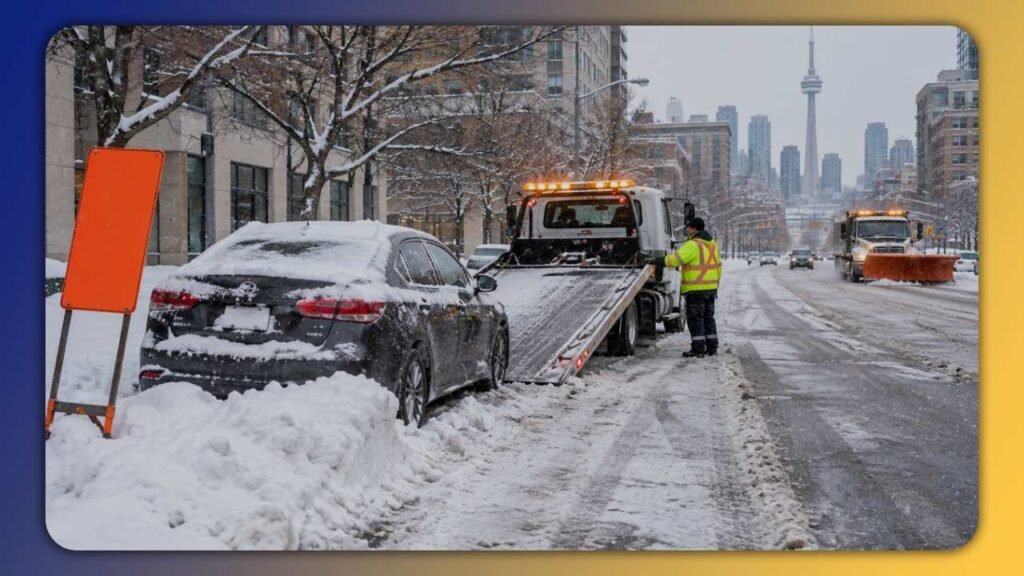
Orange temporary no-parking signs require you to move your car during the posted removal period. The City continues snow hauling after storm declarations end. A legally parked car can still obstruct a snowblower or dump truck.
Never assume a residential permit overrides temporary signs. Check both sides of your street after a storm. City crews often prioritize narrow roads and corridors where accumulated snow reduces traffic access.
You should not mistake a regular snow warning for an active parking declaration. The City publishes the legal start and end dates. A winter weather advisory can affect driving without changing snow-route rules. Conversely, crews can post a temporary orange sign after the declaration ends. The safest response combines a daily notice check with a quick walk around your parked car. Pay attention to plow schedules, bus stops, and streetcar turns.
Snow Routes That Trigger Toronto Towing Enforcement
Toronto concentrates snow-route towing on designated roads and streetcar corridors. The routes support emergency access and snow clearing. Look for permanent snow-route signs and verify the current municipal map before parking.
The official schedule identifies individual road segments and boundaries. Examples include sections of Adelaide Street, Bathurst Street, and Bayview Avenue. Your parking spot can fall outside a restricted segment even when a nearby block remains restricted.
Downtown Streets and Streetcar Corridors
Streetcar routes receive particular attention because a parked car can block transit. Snowbanks narrow the clearance near tracks and turning areas. Avoid stopping beside streetcar rails or in locations marked by snow-route signs.
Toronto Transit Commission (TTC) vehicles need clear tracks and road space. A blocked streetcar can disrupt trips for hundreds of passengers. The City can apply higher penalties for specific streetcar obstruction offences.
Residential Permit Streets and Snow Routes
A residential parking permit does not cancel an active snow-route restriction. Move your car to another permitted space within your authorized area. Check permit conditions before using an alternate block.
You can contact the City permit office when your permit covers a restricted street-name area. Secure alternate parking before the snow arrives. Private garages and authorized off-street spaces often reduce towing risk.
The outcome of being towed during a snow emergency in Toronto depends on your exact address. A sign beside a nearby intersection does not automatically cover every adjoining street. Mark the block on the City map, then match the road segment and direction. Record any additional parking rules, including meter limits or rush-hour restrictions. Those rules continue to matter when the snow declaration does not cover your spot.
Snow Emergency Parking Fines and Towing Charges
Toronto lists snow-route penalties of up to $500 for some offences. The actual ticket depends on the specific violation. The City reported $100 tickets for certain temporary snow-removal restrictions during January and February 2026.
A fine does not automatically include a towing bill. An impounded vehicle can generate towing, storage, and applicable administrative charges. A vehicle relocated nearby usually follows a different recovery process.
Ask the actual towing or impound operator for an itemized invoice. Toronto Police contracts and Ontario towing rules control different types of operations. No private operator can promise that a City-directed tow follows its regular retail price.
Tickets for Snow Routes and Temporary Signs
Read the offence printed on your ticket before checking the amount. Different snow-related violations carry different penalties. The City has cited up to $500 for designated snow-route parking and $100 for certain temporary-sign violations.
Save photographs of the sign, nearby intersection, and ticket. Record the time you found each notice. Those details help you check whether the restriction applied to your exact parking location.
Separate Towing and Storage Costs
Impound storage charges can grow while your vehicle remains at the facility. Contact the operator promptly after Toronto Police confirms the location. Request the release requirements and a complete charge breakdown before arriving.
GTA Towing & RSA advertises 24/7 towing and accepts individual quote requests. Its About page displays illustrative service prices beside placeholder descriptions. Treat those figures as unconfirmed until the company quotes your specific job.
Why Cars Get Towed During a Snow Emergency in Toronto
A relocated car and an impounded car require different recovery steps. Toronto often moves obstructing vehicles to nearby streets during winter operations. The City can impound illegally parked vehicles and charge the owner.
An owner can confuse a relocation with theft after discovering an empty parking space. Do not assume your car was stolen. Check the police towing record first and confirm the current parking address.
Nearby Relocation After a Snowplow Visit
A nearby relocation generally sends the vehicle to another street or municipal parking location. Verify the destination before walking through snow or traffic. Inspect the car for existing and new damage once you find it.
Take pictures of the licence plates, body panels, and surrounding parking signs. Note whether the new spot has a time limit. Move your vehicle again when the new location presents another restriction.
Formal Vehicle Impoundment
An impound means the vehicle stays at an identified storage facility until release conditions are met. Call the facility for documents, hours, and payment rules. Bring government identification and proof of vehicle ownership or authorization.
Request a receipt before leaving the yard. Examine the car before driving away. Contact your insurer when you discover towing damage or an incident that requires an insurance claim.
How to Locate a Car Towed During a Snow Emergency in Toronto
To locate a car towed during a snow emergency in Toronto, call Toronto Police Service at 416-808-2222. Press 4, then 2, for the towing dispatcher. Provide your licence plate and last known parking location.
The dispatcher can tell you whether a towing operator relocated or impounded the car. Record the destination, operator name, and any reference number. Call the facility directly before travelling across Toronto.
Police Lookup and Vehicle Information
Have your plate number, vehicle description, and parking intersection ready. The plate number helps the dispatcher search the record. The intersection helps distinguish a snow-route relocation from a separate parking enforcement action.
State the approximate date and time you last saw the vehicle. Explain whether your street carried snow-route or orange temporary signs. Ask the dispatcher to repeat the destination address.
Impound Collection Documents
Confirm the required identification and release paperwork before your visit. Operators commonly request ownership evidence, personal identification, and payment. Police-held vehicles can involve additional release restrictions.
You should ask about pickup hours and accepted payment methods. Check whether another licensed driver must collect the car. Arrange alternate transport when the vehicle cannot safely return to the road.
Drivers dealing with a car towed during a snow emergency in Toronto should separate the location question from the billing question. Locate the vehicle first and confirm whether police imposed a hold. Then verify the impound operator, exact arrival time, and applicable charge schedule. Check your insurer or roadside assistance contract for covered costs. Never assume the City or your insurance automatically pays the release invoice.
How to Prevent Snow Emergency Towing Before Heavy Snow
To prevent snow emergency towing before heavy snow, check the City of Toronto winter-maintenance webpage and move your vehicle off designated routes. Review temporary signs again after plowing begins.
A municipal declaration can start before the heaviest snowfall ends. Keep your vehicle accessible for snow removal. Avoid leaving a buried car where the City needs a plow, snowblower, or emergency vehicle.
Parking Checks Before Snowfall
Check the forecast, snow-route map, and street signs before parking overnight. Save the City winter page on your phone. Compare your address with the official schedule rather than relying on neighbourhood assumptions.
Photograph your parking location before a major storm. Read restrictions around the closest streetcar tracks and intersections. An underground garage or permitted driveway often avoids snow-route enforcement entirely.
Parking Changes After Temporary Signs Appear
Move your car promptly when crews post orange snow-removal signs. Some 2026 City notices described clearing within 24 to 48 hours. Treat the actual sign and current notice as the controlling instructions.
Remove snow from windows, headlights, and the roof before driving. Clear the exhaust area before starting a snow-covered vehicle. Ask for help when snowbanks prevent safe movement.
Winter Breakdown and Private Towing Options in Toronto
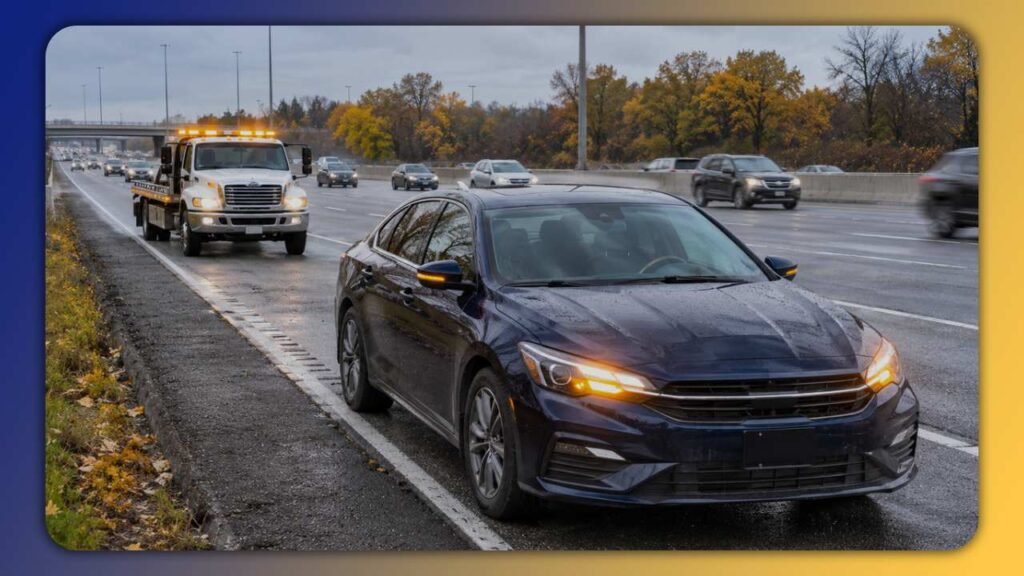
A private winter breakdown differs from a City-directed snow-route tow. Drivers can request help for a dead battery, flat tire, or mechanical failure. Government enforcement officers control a City-ordered relocation or impound.
For a breakdown outside a restricted dispatch area, you can request Toronto car towing services after confirming the destination and price. Never describe private towing as a way to reverse an official impound.
Ask whether the tow needs a wheel-lift or flatbed truck. A vehicle with damaged wheels or severe transmission problems often needs additional care. Winter snowbanks can also restrict truck access.
Safe Towing for Snowbound Vehicles
Tell the dispatcher whether your car sits in deep snow, underground parking, or a narrow lane. Mention steering, braking, or wheel damage. The operator can then select the appropriate truck and recovery equipment.
For suitable vehicles, ask about professional flatbed towing services. Confirm the operator can access the location safely. Keep the roadway clear while the towing crew prepares the vehicle.
Winter Roadside Assistance and Dispatch
Call for roadside help when a mechanical problem prevents safe travel. Give the dispatcher your address, closest intersection, vehicle model, and problem. State whether the road carries temporary snow-removal restrictions.
A battery boost or tire service can solve certain problems without a full tow. Request a clear service quote before work begins. Do not attempt roadside repairs in active traffic lanes.
Winter recovery carries additional practical risks. Snow can conceal curbs, potholes, and wheel damage near a parked vehicle. Ask the operator to assess access before attaching equipment. Keep children and passengers away from the truck while loading begins. Never step into moving traffic to photograph the tow. If the car cannot roll or steer, explain the problem before dispatch and request suitable recovery equipment.
Your Rights After a Winter Towing Dispute
You can ask for clear charges, vehicle details, and a receipt after a tow. Ontario regulates towing operators and storage operators. Enforcement and billing rules depend on the circumstances and the party that authorized the tow.
Take photographs before and after collection. Keep your parking ticket, tow invoice, and contact details together. Submit a documented complaint to the appropriate City or provincial authority when the evidence supports a dispute.
Parking Ticket Review and Evidence
Use the City parking ticket dispute process for a municipal parking penalty. Check the deadline printed on the notice. Preserve the ticket number and evidence showing the sign, road segment, and active declaration.
A valid permit alone does not prove that snow-route parking was legal. Focus your evidence on the exact restriction and location. Explain relevant facts without guessing about the enforcement officer’s reasoning.
Towing Billing and Damage Concerns
Ask the operator for an itemized invoice and preserve evidence of vehicle condition. Ontario consumer protections address towing and storage conduct. City-directed impounds also involve local operating arrangements.
Document missing belongings, damaged panels, or unfamiliar charges immediately. Ask the provider about its complaint procedure. Contact your insurer when vehicle damage requires professional assessment.
Quick Reference for Toronto Snow Emergency Parking
Use the checklist below before, during, and after a Toronto major snow event. Tasks differ for signed snow routes, temporary removal zones, and impounds. Always confirm active municipal notices.
| Task | Timing | Method | Difficulty |
| Verify snow route | Before parking | City snow route map | Easy |
| Move vehicle | Before restriction begins | Legal off-street parking | Moderate |
| Check orange signs | After snowfall | Read posted signs | Easy |
| Locate missing car | Immediately | Call 416-808-2222 | Easy |
| Collect impounded car | After police confirmation | Call storage operator | Moderate |
Toronto Snow Emergency Towing FAQs
Can my car be towed if I have a Toronto street parking permit?
Yes. A residential permit does not override a declared snow-route prohibition or an applicable temporary snow-removal sign.
Can Toronto move a legally parked car during snow removal?
Yes. The City can relocate a legally parked vehicle when the car obstructs winter maintenance operations.
Do I have to pay storage fees after an impound?
Usually, yes. The applicable operator and release circumstances determine the charges. Request an itemized invoice and collect the vehicle promptly.
Does every Significant Weather Event ban street parking?
No. A Major Snowstorm Condition activates designated snow-route parking restrictions. Temporary signs can prohibit parking separately.
Where do I call if my car disappears after snow clearing?
Call Toronto Police Service at 416-808-2222, press 4, then 2. Provide your plate number and last parking location.
Plan Your Parking and Winter Vehicle Recovery
Yes, your car can be towed during a snow emergency in Toronto when applicable restrictions or operational needs justify removal. Check official signs, move your car before clearing begins, and contact Toronto Police for missing vehicles.
For a separate mechanical breakdown or authorized vehicle move, request Toronto emergency towing help. Ask for a specific quote and follow municipal directions during active snow-removal operations.
 Call us at
 Email us at