When your car breaks down on Highway 401, switch on your hazard lights and reach a safe shoulder if possible. Call 911 for immediate danger or a blocked traffic lane; call 511 for towing in a restricted zone.
When your car breaks down on Highway 401, fast traffic around Toronto, Mississauga, Milton, and Pickering creates extra danger. A minor mechanical problem becomes a serious roadside risk when drivers stop in moving lanes. You need a safe position, the correct dispatch number, and a clear account of your location. Confirm safety before discussing prices.
Table of Contents
ToggleImmediate Safety Steps When Your Car Breaks Down on Highway 401
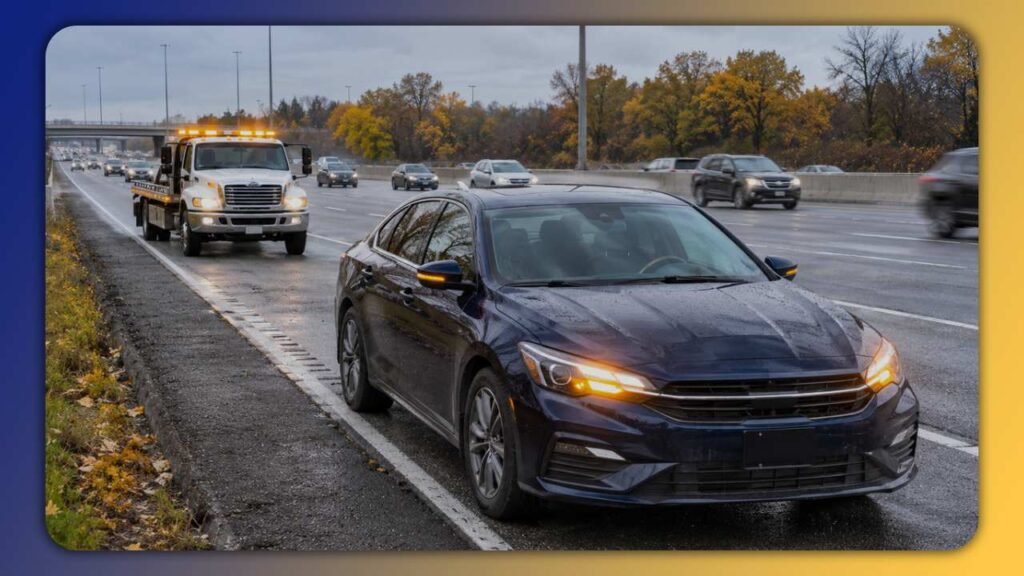
When your car breaks down on Highway 401, your first priority is avoiding moving traffic. Do not continue driving a vehicle with failed brakes, severe steering trouble, or visible fire. Begin slowing smoothly when warning lights, unusual vibrations, or power loss indicate a developing problem. Avoid sharp steering moves across active lanes.
Signal and Reach the Nearest Safe Shoulder
Turn on your four-way flashers and check surrounding traffic. Signal your intended movement while your vehicle still responds normally. Move toward the nearest safe shoulder without crossing lanes abruptly. Never stop in a live lane to inspect a warning light.
Pull as far away from traffic as the shoulder allows. Leave enough space for responders to approach without entering an active lane. On an exit ramp, avoid blocking turning traffic. Do not drive across a median to reach another carriageway.
Stay Secured While Waiting for Responders
Remaining inside with your seat belt fastened is generally safer when the car rests securely off the travelled lanes. Keep doors locked and hazard lights running. Ontario’s tow-zone guidance advises drivers against repairing vehicles or changing tires on the highway shoulder.
Choose an alternative safe location only when smoke, fire, flooding, or an immediate collision threat makes staying dangerous. Exit through the door away from moving traffic when safe. Never stand directly ahead of or behind your vehicle. Do not walk beside the highway.
Contact Emergency Services for Immediate Hazards
Call 911 when your vehicle stops in a live lane or another immediate danger exists. Tell dispatch whether anyone has injuries, whether the car blocks traffic, and whether smoke or fuel leaks appear. Do not push a stalled car through Highway 401 traffic.
A car breaks down on Highway 401 in different ways, but a blocked lane always requires urgent coordination. Follow the instructions that Ontario Provincial Police (OPP) or emergency dispatch provide. Emergency responders control traffic and vehicle removal when necessary.
How to Report a Breakdown Location on Highway 401
To report a breakdown location on Highway 401, give your travel direction, nearest interchange, and the shoulder or lane occupied. When your car breaks down on Highway 401, dispatchers need precise location details before assigning responders. When your car breaks down on Highway 401, an accurate location helps assistance approach correctly.
Identify Your Direction and Nearest Exit
Read the nearest exit number or interchange name from a safe position. State eastbound or westbound and identify collector or express lanes around Toronto. Mention nearby interchanges such as Highway 400, Highway 404, or Dixie Road when relevant.
Share the licence plate, vehicle colour, and make when requesting help. Keep your phone charged and answer promptly. Do not leave the vehicle to search for a sign.
Share Your Location Without Exiting the Car
Use a smartphone map only while parked. Send a location pin to your dispatcher when requested. Nearby ramps and parallel roads can confuse automatic location services.
Describe visible landmarks such as an overpass, distance marker, or service centre. Describe traffic exposure around the vehicle. Provide the number of passengers and any mobility concerns. Precise information helps crews prepare for arrival.
Tow Zone Rules When Your Car Breaks Down on Highway 401
When your car breaks down on Highway 401, restricted towing zones determine who can tow your vehicle. Ontario operates designated Highway 401 sections under its Tow Zone Program. The provincial rules assign work to authorized companies within each restricted area. Your normal towing choice cannot override the rules.
Request the Authorized Tow Through 511
Call 511 and select the Tow Zone Program option when your vehicle sits safely in a restricted zone and needs towing. Use 911 instead for emergencies or an immobile vehicle blocking traffic. Do not call 511 for towing outside a restricted zone.
The Ministry of Transportation (MTO) identifies restricted sections around Highway 400, Highway 404, Morningside Avenue, and Highway 412. Other designated Highway 401 sections extend through portions of Peel and Halton. Check the current Ontario 511 zone map because coverage depends on the precise kilometre and direction.
Understand the Roadside Membership Exception
An authorized roadside membership provider can respond directly under limited conditions. Your case must involve a mechanical breakdown, a safe right shoulder, and a light vehicle. The vehicle’s gross vehicle weight rating must not exceed 4,500 kilograms (9,921 pounds).
A collision, left-shoulder stop, or live-lane breakdown does not qualify for that roadside membership exception. Approved memberships differ from ordinary private towing. Ask 511 when you cannot confirm whether an exception applies.
Arrange Private Help Outside Restricted Zones
Outside the restricted program, contact a towing operator or your roadside assistance provider directly. Check the operator’s Ontario certification and request the planned destination. You can ask GTA Towing & RSA about 24 hour roadside assistance after confirming your location permits private dispatch.
A car breaks down on Highway 401 outside a designated zone without automatically restricting your provider choice. Police can still direct a tow when safety requires action. Always follow an officer’s instructions before arranging another truck.
Selecting the Correct Help for a Highway 401 Breakdown
When your car breaks down on Highway 401, choose help only after confirming safe access. When your car breaks down on Highway 401, parking-lot repair methods often become unsafe on narrow shoulders. Describe the problem first, then ask whether recovery or transport makes sense.
Highway 401 Breakdown Quick-Reference Table
| Task | Timing | Method | Difficulty |
| Warn traffic | Immediately | Hazards and safe shoulder | Low |
| Report danger | Immediately | Call 911 | Low |
| Request tow-zone help | Once safe | Dial 511 | Low |
| Confirm towing details | Before loading | Check operator and destination | Medium |
| Save proof | After recovery | Keep invoice and photos | Low |
Battery Failure and Starting Problems
A dead battery commonly prevents starting after a rest stop or fuel stop. An alternator failure can also stop a running vehicle. Do not jump-start a vehicle beside moving traffic. Let trained personnel select a safer service position.
If your car breaks down on Highway 401 after electrical warnings, report every dashboard message. Ask whether technicians can test the charging system away from the active highway. GTA Towing & RSA provides mobile battery boost service where dispatch rules and conditions allow.
Tire, Fuel, and Engine Problems
A shredded tire, fuel shortage, or overheating engine needs a different response. Never change a tire beside active Highway 401 traffic. Do not raise the hood on the shoulder or open a hot radiator cap. Stop the engine when overheating and follow professional instructions.
A roadside technician can assess fuel delivery or wheel damage at a safe location. Report locked wheels or transmission failures.
Flatbed Transport for Disabled Vehicles
Flatbed towing keeps a disabled vehicle supported during transport. Vehicle manufacturers specify appropriate methods for all-wheel-drive cars, electric vehicles, and low-clearance models. Ask the dispatcher about equipment suited to your vehicle rather than assuming every tow truck works.
Ask how loading will work and where the truck will deliver the vehicle. Notify the operator about a damaged suspension, locked wheels, or an electric parking brake. Record your chosen repair destination before loading begins.
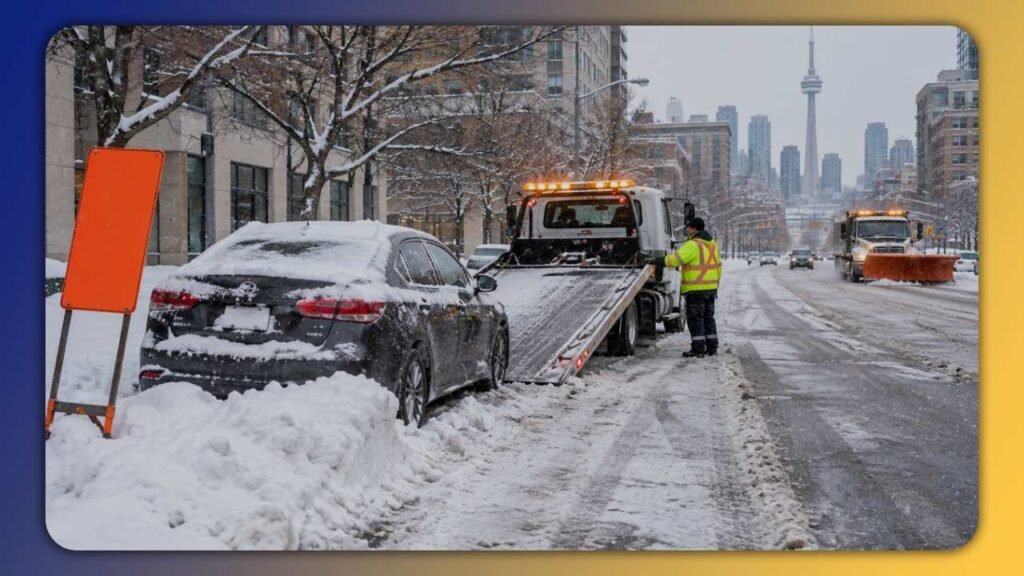
Breakdown Safety During Rain, Snow, and Darkness
When your car breaks down on Highway 401, poor visibility increases roadside collision risk. Rain spray, snow, ice, and nighttime glare reduce the time other drivers have to notice a stopped vehicle. When your car breaks down on Highway 401 in bad weather, focus on passenger safety rather than repairs.
Manage Wet Pavement and Heavy Rain
Slow smoothly and avoid last-second lane changes when your car develops trouble in rain. Turn on your hazard lights after recognizing the emergency. Park as far from traffic as conditions safely allow. Watch for water collecting around shoulder drains.
Never enter traffic to take photographs. A car breaks down on Highway 401 during rain without granting drivers space to inspect tires. Keep windows mostly closed while preserving ventilation and visibility.
Prepare for Snow, Ice, and Cold Weather
Stay inside your safely positioned vehicle with a seat belt fastened while awaiting responders. Carry a charged phone, insulated clothing, drinking water, and a flashlight. Avoid prolonged engine idling in deep snow because a blocked exhaust creates carbon monoxide danger.
Tell dispatch if children, older adults, or passengers with health needs are present. Share the outside temperature and any signs of reduced cabin heat. Do not walk toward an interchange through snowbanks or beside traffic.
Stay Visible Without Leaving a Safe Position
Keep four-way flashers on while you wait. Use reflective equipment only if placing the equipment poses no traffic danger. Ontario advises drivers to avoid standing in front of or behind a disabled vehicle. The safest available location depends on actual traffic exposure.
When your car breaks down on Highway 401 at night, describe any lighting problems to dispatch. Keep a flashlight available for responders. Never attempt to flag down moving traffic from the roadway.
Understanding Towing Costs and Your Legal Rights
When your car breaks down on Highway 401, ask for itemized charges before authorizing a private tow. Ontario requires certified operators to follow conduct, consent, and rate-disclosure requirements. Police-directed towing and restricted-zone assignments have additional rules.
Check the Applicable Rate Schedule
Ontario publishes a Tow Zone Program fee schedule for authorized services in restricted areas. That schedule differs from a private towing company’s quotation outside those zones. Vehicle class, recovery work, storage, and distance affect the relevant charges.
GTA Towing & RSA invites quote requests without publishing a guaranteed Highway 401 towing rate. Do not treat an online market estimate as a fixed invoice. Ask the operator to explain applicable mileage and additional recovery work.
Confirm Certification, Consent, and Destination
Request the driver’s tow certificate and company identity when appropriate. Read the service agreement before signing. Confirm the final destination, whether a storage yard applies, and who authorizes any additional movement. Keep copies of the paperwork.
You can generally choose the destination for a permitted private tow, subject to police and restricted-zone directions. Authorized tow-zone operators must follow the program’s destination rules. Avoid an unsolicited driver’s pressure to select a particular repair shop.
Keep an Itemized Invoice and Payment Record
Request a bill listing the tow, distance, recovery services, and storage charges separately. Confirm the final amount before paying. Keep receipts for reimbursement or a complaint.
A car breaks down on Highway 401 without automatically creating an insurance claim. Coverage depends on your policy, membership, and the event. Contact your insurer using the number on your policy when reimbursement is unclear.
Preparing Your Car for Recovery After the Breakdown
When your car breaks down on Highway 401, prepare for towing only when responders permit safe access. Photograph the vehicle’s condition if you can remain clear of traffic. Remove essential belongings only when safe and permitted. Your safety takes priority over documentation.
Document the Vehicle and Remove Valuables
Photograph existing damage, the licence plate, and dashboard warnings from a protected position. Keep registration, wallet, prescription medication, and house keys accessible. Do not cross Highway 401 lanes to retrieve dropped objects.
Tell the operator about child seats, pets, mobility equipment, or fragile cargo. Avoid removing heavy luggage during an active roadside recovery. A responder can advise when the area permits safe access to the vehicle.
Confirm the Tow Destination and Follow-Up Steps
Write down the repair shop or storage yard’s exact address. Confirm opening hours and release requirements before the truck leaves. Ask how to retrieve the vehicle. Keep the tow driver’s company and certificate details.
When your car breaks down on Highway 401 far from home, a destination closer to your regular mechanic can seem convenient. A safer initial drop-off can be necessary under police instructions or tow-zone requirements. Discuss onward transport after the vehicle clears restricted highway space.
Prevention Steps Before Your Next Highway 401 Trip
A short pre-trip check reduces the chance your car breaks down on Highway 401. Focus on the battery, tires, fluids, and warning lights before entering Highway 401. A vehicle with a known critical defect should receive service before a long drive.
Check Tires and Engine Condition
Inspect tire pressure and visible tread damage while parked safely. Follow the tire pressure shown on the vehicle’s door placard. Check engine oil, coolant, and washer fluid using manufacturer instructions. Address persistent overheating or charging warnings before departure.
Review the maintenance schedule for belts, hoses, and brakes. Ask a qualified mechanic to investigate unusual noises and fluid leaks. Never assume that a warning light disappears permanently after restarting the engine.
Prepare a Compact Emergency Kit
Carry a phone charger, flashlight, reflective vest, drinking water, and weather-appropriate clothing. Store a first-aid kit and essential medication where occupants can reach them. Keep membership details accessible.
Tell a family member your route when travelling alone at night. Check Ontario 511 for active closures and major delays before departure. A car breaks down on Highway 401 less predictably than scheduled maintenance, so preparation matters.
Frequently Asked Questions
Should I call 911 if my car breaks down on Highway 401?
Yes, when the vehicle blocks a live lane or creates immediate danger. Call 511 instead for non-emergency towing from a safe restricted-zone position.
Can I call my own tow truck on Highway 401?
Yes, outside restricted towing zones, subject to police directions. Restricted zones normally require authorized operators, with a limited approved-membership exception.
Should I change a flat tire on the Highway 401 shoulder?
No. Ontario advises drivers not to attempt tire changes on highway shoulders. Request authorized assistance and remain in a safe position.
Do I need to stay inside my vehicle after a breakdown?
Usually yes, when the vehicle rests safely off traffic. Stay belted. Leave only when an immediate hazard makes exiting safer.
Can a breakdown on Highway 401 create storage charges?
Yes. Storage fees can apply when a vehicle reaches an approved yard. Ask for the fee schedule and itemized invoice.
Safe Recovery and Professional Help After a Highway 401 Breakdown
A car breaks down on Highway 401 without warning, but your response can reduce roadside danger. Move safely, use hazard lights, and contact the correct dispatcher. Remember 911 for immediate danger and 511 for towing inside restricted zones. Once you reach an area permitting private dispatch, ask GTA Towing & RSA about safe flatbed towing options. Request a clear quote before booking.
 Call us at
 Email us at