Towing solves unauthorized parking after it’s already happened. Prevention is about making it less likely to happen at all. Most properties with a chronic parking problem are missing one or two basics that, once fixed, cut down how often towing is even necessary.
Table of Contents
ToggleSignage Does More Work Than People Expect
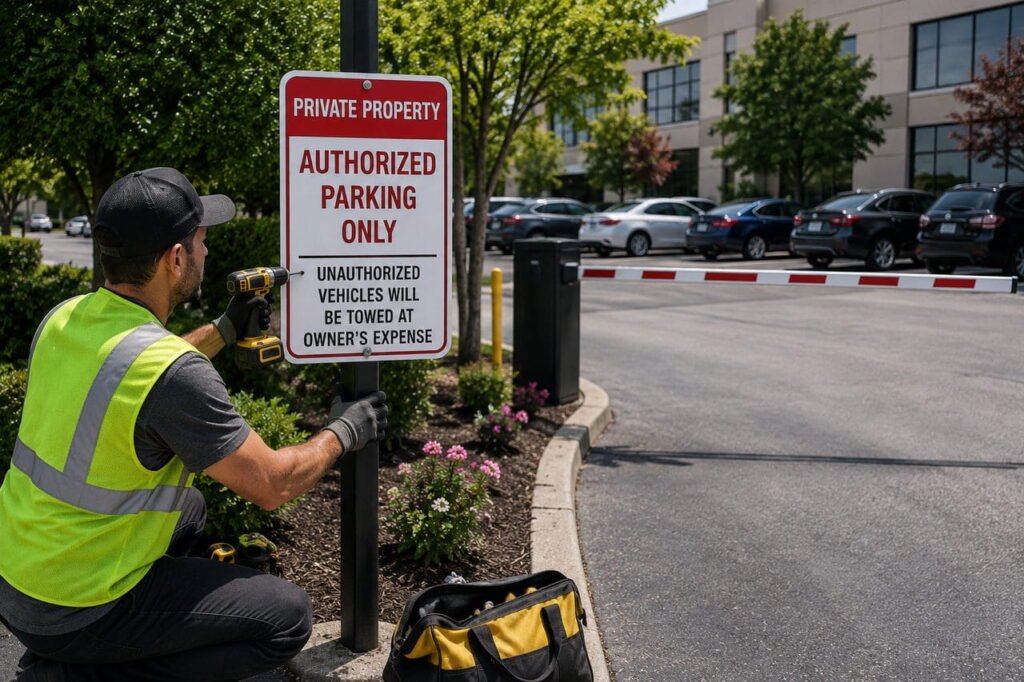
A sign that’s faded, small, or placed somewhere drivers don’t actually look isn’t doing its job. Effective signage is:
- Visible from the entrance, not tucked in a corner of the lot
- Specific about who’s allowed to park and when
- Clear about the consequence — that unauthorized vehicles may be towed at the owner’s expense
- Consistent across every entrance to the property, not just the main one
Properties that upgrade tired or missing signage often see a real drop in casual violations, simply because the rule is now impossible to miss.
Make the Rules Easy to Follow, Not Just Easy to Post
Unauthorized parking sometimes happens because the legitimate rules are confusing, not because people are deliberately breaking them. If visitor parking requires a permit, a call, or a specific process that’s hard to figure out, some visitors will just park wherever’s open instead. Simplifying how legitimate parking works — clear visitor spots, an easy permit process, obvious signage for reserved spaces — removes a lot of the ambiguity that leads to accidental violations.
Communicate Directly With Tenants and Staff
For apartment buildings, offices, and mixed-use properties, a lot of unauthorized parking traces back to tenants, staff, or their guests rather than random strangers. A short, clear communication — in a lease, a building notice, or a staff memo — about where people are and aren’t allowed to park, and what happens if the rule is broken, closes a gap that signage alone can’t.
Consider Visibility and Lighting
Poorly lit lots or lots without any visible monitoring tend to attract more casual violations, simply because there’s less perceived risk. Improving lighting, or making it clear the property is monitored, is a low-cost step that changes behaviour without any enforcement action at all.
Use Reserved Spaces Efficiently
Sometimes unauthorized parking is really a signal that legitimate demand exceeds supply — not enough visitor spots, or reserved spaces that go unused most of the time. Reviewing how spaces are actually allocated occasionally reveals an easy fix: reassigning underused reserved spots, or adding a couple of visitor spaces, can reduce the pressure that leads people to park somewhere they shouldn’t.
When Prevention Isn’t Enough
Even with good signage, clear communication and sensible space allocation, some properties will still deal with repeat violations — especially commercial lots near busy areas or apartment buildings with high visitor turnover. At that point, having an established towing process ready is what separates a quick resolution from a drawn-out problem. Properties that already have property towing set up as a documented, authorized process can act quickly once prevention alone stops being enough, instead of scrambling to figure out signage and authorization after the fact.
Review What’s Actually Working
Prevention isn’t a one-time fix. It’s worth periodically checking whether unauthorized parking incidents have gone down since signage or policy changes, and adjusting if a particular entrance, time of day, or spot keeps coming up as a problem area.
The properties with the fewest towing incidents usually aren’t the ones towing the most aggressively — they’re the ones where the rules are clear, visible, and easy to follow in the first place.
FAQs
What’s the single most effective prevention step?
Clear, visible signage at every entrance tends to have the biggest impact, since a lot of unauthorized parking is simply people not realizing — or not being reminded — that a space is restricted.
Can better lighting really reduce unauthorized parking?
It can help. Poorly lit or seemingly unmonitored lots tend to see more casual violations, so improving visibility can reduce opportunistic parking without any active enforcement.
Should visitor parking rules be posted or communicated directly?
Both work best together — signage covers people who aren’t otherwise informed, while direct communication through leases or notices reaches tenants and staff who are the more likely source of violations.
Does prevention mean I’ll never need to tow a vehicle?
Not necessarily. Prevention reduces how often towing is needed, but persistent or high-traffic properties may still need an established towing process for the cases prevention doesn’t catch.
How often should signage and parking policy be reviewed?
There’s no fixed schedule, but it’s worth reviewing after any nearby changes — new businesses, new tenants, or a noticeable increase in violations.
 Call us at
  Email us at