You look outside and there’s a vehicle in your driveway, your reserved spot, or blocking your loading area — and it isn’t yours, and you didn’t invite it. It’s frustrating in the moment, but the right response is pretty straightforward once you know the order to do things in.
Table of Contents
ToggleStep 1: Don’t Touch the Vehicle
It’s tempting to want to move it yourself, block it in, or leave an angry note under the wiper. Don’t. Interfering with someone else’s vehicle can create liability for you, even when they’re clearly in the wrong. The safest and most effective path is documentation followed by a proper removal process.
Step 2: Document Everything
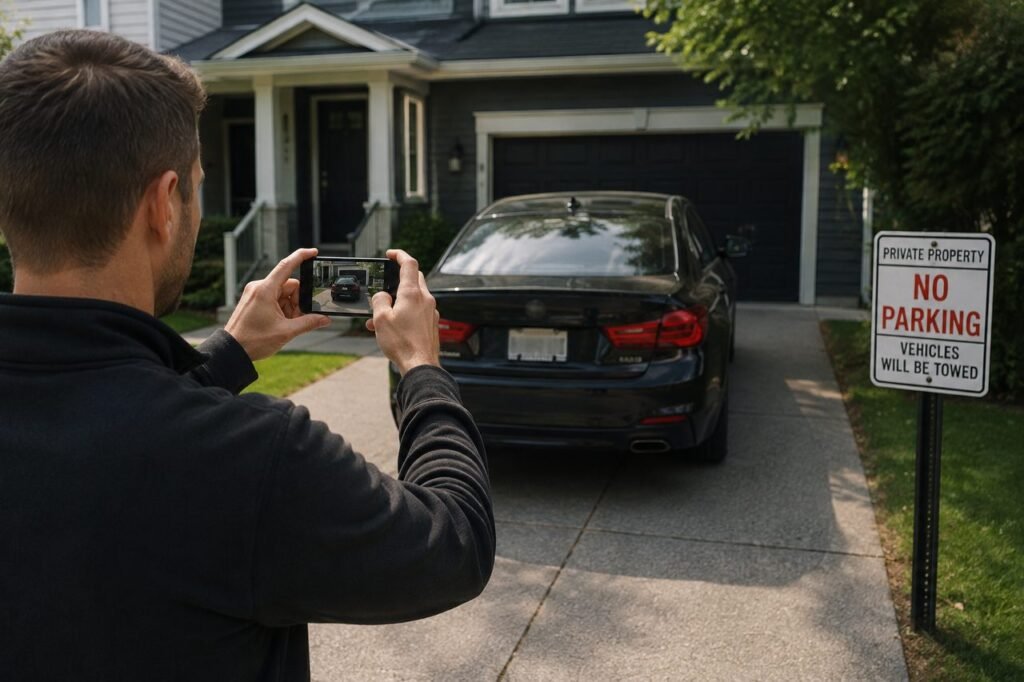
Before you do anything else, take a few photos:
- The vehicle’s license plate, clearly visible
- The vehicle’s position relative to your property line, driveway, or reserved space
- Any signage on your property showing parking restrictions
- The time and date, which most phone cameras record automatically
This takes two minutes and matters a lot if the situation escalates or the tow is ever questioned afterward.
Step 3: Check Whether You Have Signage in Place
If you’re a homeowner dealing with a one-off situation in your own driveway, signage usually isn’t the issue — it’s clearly your private property. But if this is happening on a commercial lot, apartment building, or shared parking area, whether you have visible, compliant signage matters for how straightforward the tow will be to arrange and defend if questioned.
Step 4: Decide If This Needs a Tow Right Now
Ask yourself a quick question: is the vehicle actively blocking something — your driveway, an entrance, emergency access — or is it just occupying a space you’d rather it didn’t? If it’s genuinely blocking access, that’s usually a same-day tow situation. If it’s a spot issue without urgency, you have more room to leave a notice first and see if it resolves on its own.
Step 5: Contact a Towing Company
Once you’ve documented the situation and confirmed it needs to be addressed, contact a towing company that operates under Ontario’s current certification requirements. They’ll typically need:
- Your address and confirmation that you’re the property owner or authorized to request the tow
- Photos or a description of the vehicle and where it’s parked
- Confirmation of signage, if the property is a shared or commercial lot
A property owner requesting property towing for the first time can expect the company to ask these questions before dispatching — it’s part of how a legitimate towing operator confirms the request is properly authorized.
Step 6: Keep Your Documentation
After the vehicle is removed, hold onto your photos and any notice you left, along with the invoice from the towing company. If the situation is ever disputed, having a clear record of what happened and when protects you.
If This Keeps Happening
A one-time stranger in your driveway is an inconvenience. The same spot getting used repeatedly is a pattern worth addressing more directly — updated signage, a documented policy if it’s a shared property, or a standing relationship with a towing company so you’re not starting from scratch every time.
Dealing with an unauthorized vehicle isn’t complicated once you know the steps. Document first, confirm the situation actually calls for a tow, and work with a properly certified towing company to handle the rest.
FAQs
Can I move the vehicle myself if it’s blocking my driveway?
It’s best not to. Moving or interfering with someone else’s vehicle can create liability, even when they’re parked without permission. Document the situation and arrange a proper tow instead.
How quickly can a vehicle be towed from my property?
It depends on the towing company’s availability and how urgent the situation is — a vehicle blocking access is usually treated as higher priority than a non-urgent spot issue.
Do I need signage to have a car towed from my own driveway?
For a private single-family driveway, signage typically isn’t the deciding factor since ownership is clear. Shared or commercial properties usually do need visible signage in place.
What information does a towing company need from me?
Typically your address, confirmation you’re authorized to request the tow, and details about the vehicle and where it’s parked.
What if the same vehicle keeps parking on my property?
Repeated incidents are worth documenting as a pattern, and it may be worth reviewing your signage or setting up a standing arrangement with a towing company if it keeps happening.
 Call us at
  Email us at