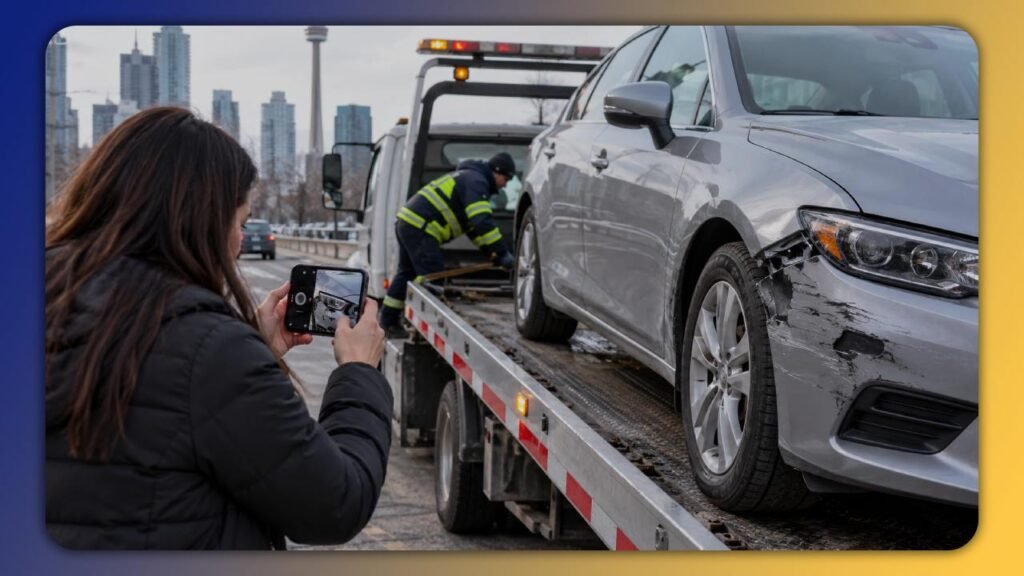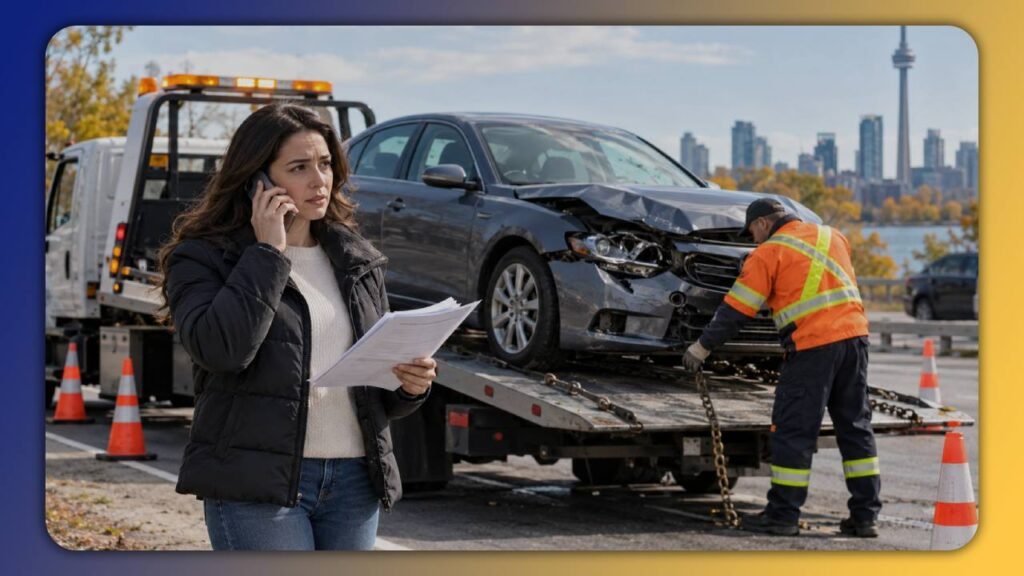
A collision on a residential street and a collision on the 401 are not the same situation, even if the damage looks similar. Highway accident recovery in Toronto comes with added risk — live traffic moving at speed just feet away — and a few extra rules that are worth knowing before you’re stuck on the shoulder wondering what happens next.
Table of Contents
ToggleWhy Highway Recovery Is Different
Toronto’s major highways — the 401, the Gardiner Expressway, the Don Valley Parkway (DVP), and the QEW — carry some of the highest traffic volumes in the country. A stopped vehicle on any of them, even on the shoulder, is a hazard both to its occupants and to other drivers. That changes how recovery has to be handled:
- Speed matters more. Every minute a vehicle sits on or near a live lane increases risk, so highway recovery calls typically get priority dispatch.
- Operators need traffic-awareness training. Setting up safely next to 100+ km/h traffic isn’t the same as working in a parking lot.
- Lane closures may be involved. For serious collisions, police or MTO may close a lane or shoulder temporarily, which affects how and when recovery can happen.
- Debris and fluid cleanup matter. Highway collisions often need broader scene cleanup than a residential fender bender, sometimes coordinated with MTO’s Highway Traffic Control or spill response teams for larger incidents.
Move Over Law — Why It Applies to You Too
Ontario’s Move Over law requires drivers to slow down and move over a lane when passing stopped emergency vehicles, tow trucks, and vehicles with hazard lights on the shoulder. It exists because roadside workers and stranded drivers are frequently struck by passing traffic. If you’re ever stopped on the shoulder waiting for accident recovery, staying inside your vehicle with your seatbelt on (unless it’s unsafe to do so) and turning on hazard lights is safer than standing outside near live lanes.
What Happens After a Highway Collision
- Get to safety first. If your vehicle is drivable and it’s safe to do so, move to the shoulder rather than blocking a lane. If it’s not safe or the vehicle won’t move, stay buckled in with hazards on and wait for help rather than exiting into traffic.
- Call 911 if required. Highway collisions with injuries, blocked lanes, or significant damage require a police report.
- Call your accident recovery provider. As with any collision, you have the right to choose who tows your vehicle — even on the highway, even if OPP or Toronto Police have their own contracted rotation truck arrive to clear the lane. In many cases, once the immediate safety issue is resolved, you can still direct where your vehicle ultimately goes.
- Recovery from off-road positions. If a vehicle has left the roadway — into a ditch, median, or barrier — it needs winching equipment, not just a standard tow. This is where the difference between accident recovery and regular towing matters most.
Common Toronto Highway Recovery Scenarios
- Rear-end collisions in 401 stop-and-go traffic, often multi-vehicle
- Single-vehicle incidents on the DVP curves, sometimes ending in the median or against a barrier
- Gardiner Expressway breakdowns or collisions near the elevated sections, where shoulder space is limited
- QEW collisions near interchange merges, where high-speed lane changes increase collision risk
Each of these calls for an operator comfortable working close to live traffic, with the right winching and flatbed equipment for vehicles that didn’t simply stop — they left the road, spun, or were struck.
Choosing a Provider for Highway Recovery
Ask directly whether a company has experience with highway recovery specifically, not just standard towing. Response time matters more here than almost anywhere else, both for your safety and to reduce the traffic impact of a stopped vehicle.
GTA Towing and Roadside Assistance provides 24/7 accident recovery in Toronto, including highway incidents on the 401, DVP, Gardiner, and QEW, with operators trained to recover vehicles safely from the shoulder, median, or off-road positions.
Related reading: Accident Recovery vs. Regular Towing in Toronto: What’s the Difference?
 Call us at
  Email us at