You must report a qualifying collision to police in Ontario, but you do not always need to visit a reporting centre. A collision reporting centre in Ontario handles many non-emergency crashes when police direct drivers to report there.
In 2026, Ontario requires reports when combined vehicle or property damage exceeds $5,000, or when certain injuries or property damage occur. A police officer can direct you to a specific reporting process. Confirm local instructions before moving a damaged vehicle.
Table of Contents
ToggleMandatory Reporting Rules for an Ontario Collision
The reporting requirement depends on damage, injury, and the circumstances of the crash. Ontario’s Highway Traffic Act sets the basic duty. Local police services decide which qualifying cases belong at a Collision Reporting Centre (CRC).
The $5,000 threshold took effect on January 1, 2025. Older articles still describe the previous $2,000 limit. Follow the current threshold rather than old online summaries or outdated handouts.
The $5,000 Combined-Damage Threshold
Add the apparent damage across every involved vehicle and affected property. For example, one car has $3,200 damage. Another car has $2,100 damage. The combined estimate reaches $5,300, so the reporting threshold applies.
A damaged bumper can hide broken sensors, structural components, or cooling equipment. Avoid treating a low initial estimate as a professional assessment. Contact police when you cannot determine whether the total exceeds the threshold.
Toronto Police and the Ontario Ministry of Transportation both identify more than $5,000 in total damage. Both sources also recognize injuries as a reporting trigger. Police can give directions for borderline cases.
Injuries and Property Damage That Require Police
Call 911 for serious injuries or immediate danger. Police also need notification after collisions involving damage to public property, including guardrails, traffic signals, and road signs. Toronto Police additionally specifies damage to private property.
Report suspected impaired driving, stolen vehicles, and dangerous goods incidents directly to police. Never drive an injured person to a reporting centre instead of arranging urgent medical help. Follow emergency dispatcher instructions.
A small repair bill does not remove the obligation to report a collision involving an injury. The same principle applies when a crash damages a fence, utility pole, or municipal fixture.
Situations That Do Not Require a Collision Reporting Centre in Ontario
You generally do not need a CRC visit for a minor, injury-free crash below the reporting threshold. Exchange information and contact your insurer. Police directions override general advice when the circumstances require investigation.
Minor Vehicle Damage Below the Reporting Threshold
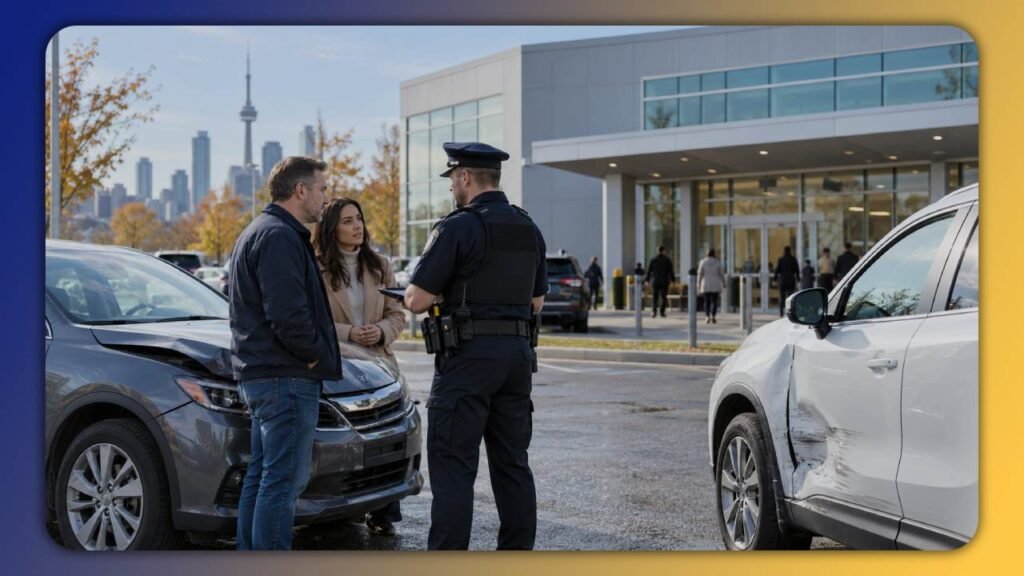
A parking-lot collision creates $700 damage to one bumper and $900 damage to another. Nobody suffers injury. No other property receives damage. The $1,600 combined estimate stays below the usual statutory threshold.
You still must stop, provide assistance, and exchange the required identification. Photograph the vehicles and record the event location. Speak with your insurance company before arranging repairs or accepting a private settlement.
Police can still accept or request a report for circumstances outside the usual damage test. Contact the police jurisdiction when the other driver refuses information or when the facts seem unclear.
Police Attendance Instead of a Centre Visit
Police attend or direct the response for serious and exceptional collisions. Examples include severe injury, suspected criminal driving, dangerous road obstructions, and damage to municipal equipment. Local procedures also address uninsured drivers.
Do not assume a driver can always leave the scene and report later. Call police for instructions when another vehicle blocks traffic. Contact the Ontario Provincial Police (OPP) about crashes on 400-series highways.
First Actions Following a Road Collision
Protect people first, then collect evidence and report the crash. A safe response reduces roadside hazards and preserves information your insurer needs. Never stand in active traffic to photograph a vehicle.
Moving Vehicles and Protecting the Scene
Move a drivable vehicle away from moving traffic when you can safely do so. Activate hazard lights. Leave dangerous positions immediately and follow police instructions for major roadways.
Watch for leaking fuel, deployed airbags, exposed wires, and damaged wheels. Do not start a vehicle with visible fluid leaks or severe steering damage. Ask a dispatcher whether you should remain inside a vehicle.
Photograph vehicle positions before movement only when the location is safe. Capture road signs, lane markings, skid marks, and traffic signals. Avoid obstructing emergency responders during documentation.
Collecting Driver and Witness Information
Record names, licence details, vehicle plates, and insurance information for every involved driver. Note the time and exact intersection. Collect contact details from independent witnesses, including nearby pedestrians and drivers.
Photograph the visible damage on each vehicle. Capture wide photographs and close photographs before a tow truck loads your car. Save original images rather than editing away important timestamps.
Write a short account while your memory remains fresh. Separate personal observations from guesses about speed or fault. Do not argue about legal liability at the roadside.
Deadlines for a Collision Reporting Centre in Ontario
Report a qualifying collision as soon as possible. Local police services publish different attendance windows and procedures. Never assume every Ontario municipality follows one universal 24-hour deadline.
Toronto and Regional Reporting Windows
Toronto Police directs drivers to report qualifying collisions promptly at a CRC. Durham Regional Police instructs drivable-vehicle drivers to attend within 48 hours. Waterloo Regional Police uses a 24-hour CRC attendance window.
Ottawa Police states that drivers must report collisions promptly and identifies a 30-day outer reporting limit. That statement does not grant permission to wait 30 days. Act immediately and confirm the responsible police service’s directions.
Check the police authority covering the crash location, not simply the area around your home. A collision in Whitby falls under different instructions than a collision in Toronto.
Late Reports and Overnight Collisions
Call the responsible police service immediately when a reporting centre has closed. Explain the collision time, vehicle condition, and any injuries. Ask whether police require immediate attendance or the next operating session.
Toronto Police lists special attendance circumstances for collisions between midnight and 8 a.m. involving an undrivable vehicle. Durham Police also gives specific towing instructions during CRC operating hours.
Keep a record of your calls, including the time and the officer’s instructions. Do not infer that a closed office suspends every reporting duty. Confirm the accepted process for your municipality.
Documents and Vehicle Evidence for Your Visit
Bring your driver’s licence, vehicle ownership permit, insurance proof, and collision details. Police services often require the involved vehicle for photographs or inspection. The actual driver must usually attend rather than sending a relative.
Bring the other driver’s identification details and witness contact information. Keep photographs available on your phone. Record a police event number or earlier dispatcher reference when police provided one.
You can begin an online collision form in participating jurisdictions. Toronto Police states that an online start alone does not finalize the report. Complete the required identity check and vehicle inspection at the centre.
Prepare clear descriptions of travel direction, traffic conditions, and impact location. Include whether airbags deployed and whether the car remained drivable. Report facts without guessing the other driver’s intentions.
Use the following quick-reference table before leaving the collision scene.
| Task | Timing | Method |
Difficulty |
| Check injuries | Immediately | Call 911 for emergencies | High priority |
| Move safe vehicles | Immediately when safe | Clear traffic lanes | Moderate |
| Exchange information | At the scene | Photograph licences and insurance | Easy |
| Document damage | Before towing when safe | Photos and witness details | Easy |
| Report qualifying crash | As soon as possible | Police or jurisdictional CRC | Moderate |
| Notify insurer | As soon as possible; generally within 7 days | Call agent, broker, or claims team | Easy |
The Financial Services Regulatory Authority of Ontario describes a 7-day period for notifying your insurance representative. Your policy and exceptional circumstances can affect the process. Contact your insurer promptly.
Collision Reporting Centre Locations Across the GTA
Choose the centre authorized for the collision jurisdiction. Toronto Police lists CRC locations in Toronto East and Toronto North. Both locations currently advertise daily operating hours from 8 a.m. to midnight.
Toronto East operates at 39 Howden Road, Scarborough. Toronto North operates at 113 Toryork Drive, North York. Confirm hours before travelling because holiday operations and special service arrangements can change.
Durham Police identifies its regional centre at 650 Rossland Road East, Whitby. The listed hours run from 10 a.m. to 6 p.m. daily. Other regions maintain separate reporting centre networks.
Use your police service’s official collision reporting page to find a current location. Toronto Police links to Peel, York, Durham, and Halton services. A nearby centre outside your jurisdiction might not accept your incident.
Call the police service for directions when your collision occurred on Highway 401 or another 400-series highway. The OPP handles those highways. Do not assume a municipal reporting centre controls every expressway collision.
Towing an Undrivable Vehicle After a Collision
Arrange a suitable tow and follow the police service’s required destination. A damaged vehicle often needs CRC inspection before repairs. Never choose a repair shop first when police have directed direct transport to a reporting centre.
Direct Transport to a Reporting Centre
Toronto Police instructs that vehicles towed from collision scenes must travel directly to a CRC location. Halton Police also requires direct transport during operating hours. Confirm local directions before dispatch.
For damaged steering, broken wheels, or major body damage, ask about a flatbed or specialized recovery setup. GTA Towing & RSA describes winches, dollies, and skates for accident vehicles.
You can request accident towing services Toronto and explain the vehicle condition. Ask the dispatcher to confirm police directions and the required destination before moving the car.
Keep the vehicle accessible for official photographs. Avoid cleaning, dismantling, or repairing collision damage before a requested inspection. Ask police where an undrivable vehicle should remain during a closure.
Towing Consent and Pricing Checks
Review the towing authorization and itemized charges before approving the service. Ontario towing rules require transparency. Ask for the maximum rate schedule, company identification, and destination details.
Your choice of tow operator and repair facility remains important, subject to safety directions and regulated highway zones. Do not sign a blank form. Request a copy of every authorization and receipt.
GTA Towing & RSA does not publish one universal accident-towing price on its accident towing page. The company describes rates based on distance, vehicle type, and recovery difficulty. Request the applicable quote.
For extensive crash damage, professional accident recovery services can help coordinate specialized loading. Tell dispatch about wheel damage, blocked steering, rollover positions, or an underground parking location.
A flatbed can support cars that cannot roll safely. Tell the dispatcher about low ground clearance and immobilized wheels. Confirm equipment availability before booking.
Insurance Claims After Collision Reporting
Notify your insurer promptly, even when police do not require CRC attendance. Police reporting and insurance claims follow separate processes. A police report does not automatically authorize repairs or guarantee insurance coverage.
Give your insurer the crash date, location, involved vehicle information, and available photographs. Provide the collision report number after the CRC issues one. Retain your tow invoice and recovery documentation.
Ask your adjuster about approved inspections and towing reimbursement under your policy. Ask whether the insurer needs photographs before a repair shop dismantles damaged components. Keep receipts for storage and transportation.
An insurance company assesses coverage, fault, and repair payments under policy terms and Ontario rules. A towing operator does not decide legal fault. Do not interpret a CRC report as a decision about financial responsibility.
Contact your insurer before accepting a cash settlement from another driver. Ask about collision benefits, deductible obligations, and approved repair facilities. Document each claim conversation with names and dates.
Special Cases Involving Hit-and-Runs and Highways
Contact police when another driver leaves without providing information. Report the suspected hit-and-run promptly, even when visible damage seems minor. Police services use different procedures for unknown suspects and identified vehicles.
London Police accepts certain unknown-driver hit-and-run reports at its CRC. Durham Police directs drivers to contact police for fail-to-remain collisions. Follow the policy of the location where the crash occurred.
For a collision on Highway 401, Highway 400, or Highway 427, contact the OPP. Share the highway number, travel direction, nearby exit, and traffic hazards. Do not attempt to cross active highway lanes.
A vehicle striking a guardrail or traffic sign creates a public-property issue. Notify police regardless of a low vehicle repair estimate. Photograph the damaged fixture only when you can do so safely.
A pedestrian or cyclist injury also changes the reporting route. Call emergency services for serious injuries. Ask police about specialized CRC procedures for less serious incidents involving vulnerable road users.
Practical Records That Help Avoid Claim Delays
Create one complete crash record before submitting an insurance claim. Keep contact details, photographs, and the official reporting number together. A single folder reduces missing information and repeated requests from your adjuster.
Save digital photographs of every vehicle side, the licence plates, and the road layout. Record the exact collision time and nearby address. Preserve dash-camera footage before automatic recording overwrites the original file.
Ask witnesses for permission to share their contact information with police and insurers. Describe what each witness actually observed. Avoid writing conclusions about another driver’s intentions or attention.
Keep a copy of any completed reporting form and every written police direction. Record the assigned event or incident number exactly. Ask the reporting centre how insurers obtain the official report.
Check your towing paperwork against the vehicle’s destination. Review the pickup location, drop-off address, operator identification, and authorized charges. Request correction before signing when the document lists an unexpected destination.
Photograph the car again after unloading when access is safe. Compare visible damage with earlier photographs. Ask the towing company how to report any transport-related concerns.
Tell your insurer whether the vehicle remains in a storage yard or at a repair facility. Ask who approves additional storage days. Keep the adjuster informed when inspections or vehicle transfers change the location.
Retain original receipts for towing, taxis, rental transportation, and emergency storage. Your policy determines reimbursable expenses. Never assume every expense qualifies without checking coverage.
Review the police service’s current guidance before attending a centre. Toronto, Durham, Ottawa, and Halton publish different local instructions. Double-check the centre address, accepted reporting times, and whether a damaged vehicle must accompany you.
Drivers often underestimate modern sensor and lighting repairs. A slight bumper impact can affect radar equipment or mounting brackets. Use a professional estimate when assessing combined damage rather than relying only on visible scratches.
If the other driver disputes the sequence, write down your own observations without escalating the disagreement. Ask police how to provide dash-camera footage or witness details. Let the relevant investigators and insurers assess competing accounts.
A reporting centre documents a collision; the centre does not replace emergency services. Call 911 for serious danger, and use non-emergency police channels for procedural questions. Follow the responding officer’s directions over general online guidance.
Frequently Asked Questions
Do you have to visit a CRC after every car accident in Ontario?
No. Minor crashes below the reporting threshold generally do not require a CRC visit when no other mandatory reporting trigger applies.
Is the Ontario collision reporting threshold $2,000 in 2026?
No. Ontario raised the combined damage threshold to more than $5,000 on January 1, 2025.
Can you file an Ontario collision report entirely online?
No, not in every jurisdiction. Toronto requires in-person completion and identification after an online report starts.
Does the other driver need to attend the same CRC?
No. Ottawa Police says involved drivers do not need to use the same reporting centre, although each driver must report.
Can you choose your tow truck after an accident?
Yes, generally. You can choose a towing company, subject to police directions, safety rules, and applicable regulated tow zones.
Reliable Collision Reporting and Towing Support
Act quickly, follow local police instructions, and preserve your collision records. The collision reporting centre in Ontario process protects accurate reporting, while qualified towing helps move damaged vehicles safely. Call GTA Towing & RSA at 437-460-6320 for an accident-towing quote and destination guidance. Visit the company’s accident towing service page for availability and towing details. Explore safe flatbed towing services when a damaged vehicle needs secure transport.
 Call us at
 Email us at