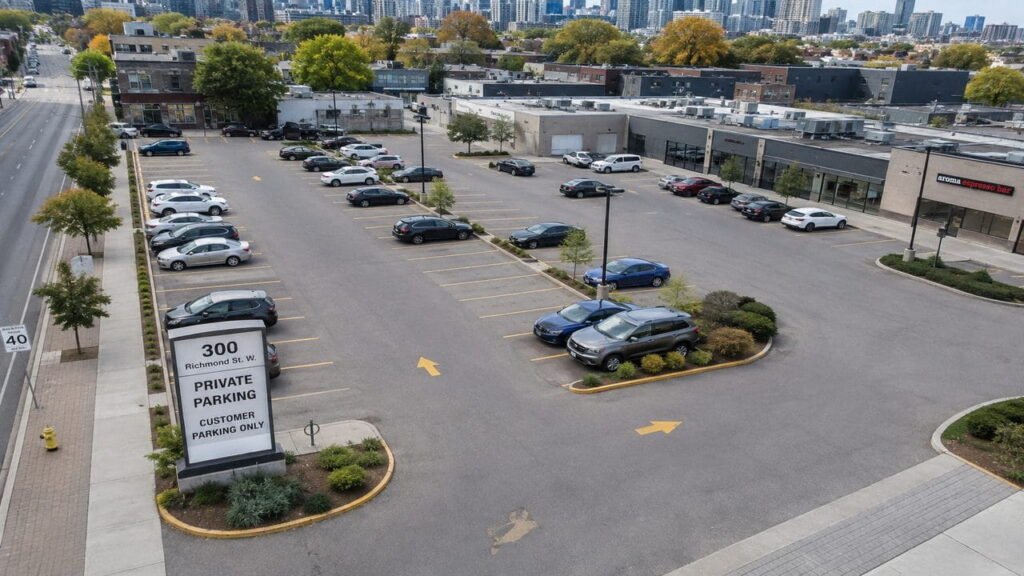
Managing a private parking lot in Toronto — whether it belongs to a plaza, an office building, or an apartment complex — usually means balancing two things: making sure the people who are supposed to park there actually can, and dealing with the ones who aren’t supposed to be there at all. This guide walks through how a private parking lot towing process is typically set up and run.
Table of Contents
ToggleStart With the Lot Itself, Not the Tow Truck
Before towing ever enters the picture, the lot needs the basics in place. That means clearly marked spaces — reserved, visitor, accessible, loading — and signage at every entrance stating who’s allowed to park and what happens if they’re not authorized. A lot without this groundwork makes any towing request harder to justify later, regardless of how obvious the violation seems in the moment.
Different Lot Types, Different Problems
The parking issues a plaza deals with aren’t the same ones an apartment building or an office deals with:
- Commercial plazas often see spillover parking from nearby businesses that don’t have their own lot, especially during busy shopping periods
- Office buildings tend to deal with all-day parking from people working nearby who aren’t tenants
- Apartment and condo buildings more often see visitor spots used long-term, or guest parking abused by non-residents
- Retail properties frequently deal with vehicles left overnight well past posted hours
Recognizing which pattern applies to your property helps determine where signage, enforcement, and communication should focus.
Setting Up a Towing Process
A functional private parking lot towing process usually has a few consistent pieces:
- Signage that clearly states parking restrictions and towing consequences, visible at every entrance
- A documented authorization process — who on the property management side can actually request a tow
- A relationship with a towing company that’s certified under Ontario’s current towing regulations and can provide transparent rates
- A record-keeping habit, so repeat violations and past notices are easy to reference
Properties that have all four in place tend to handle towing requests smoothly, without the disputes that come up when a process is improvised after the fact.
Working With a Towing Company
When evaluating a towing company for a commercial or residential lot, it’s worth asking directly about certification, published rate schedules, and how they handle documentation and invoicing. A property that relies on property towing regularly benefits from a consistent point of contact rather than calling around each time an issue comes up — response times and process familiarity tend to improve with an established relationship.
Communicating the Policy to Tenants and Visitors
A towing policy only works if people actually know it exists. For apartment and office buildings, that usually means including parking rules in lease documents or building communications, not just relying on a sign in the lot. For commercial plazas, clear signage does most of the work since there’s no ongoing tenant relationship to communicate through.
Reviewing the Process Periodically
Parking patterns change — a new business moves in nearby, a building adds units, a transit change shifts where people look for parking. It’s worth revisiting signage and enforcement processes periodically rather than assuming what worked five years ago still fits the property today.
A well-run private parking lot towing process isn’t really about the tow itself. It’s about the groundwork — signage, documentation, and a clear process — that makes towing rare because the rules are actually being followed, and effective on the occasions it’s genuinely needed.
FAQs
What does a commercial lot need before it can start towing vehicles?
Clear signage at entrances, a documented authorization process for requesting tows, and a relationship with a certified towing company are the basics most properties need in place.
Do apartment buildings handle towing differently than commercial plazas?
The underlying process is similar, but apartment buildings often communicate parking rules through lease documents, while commercial plazas rely more heavily on posted signage since there’s no tenant relationship.
How often should a property review its parking signage?
There’s no fixed schedule, but it’s worth checking periodically, especially after changes nearby that might shift parking pressure onto your lot.
Can a property owner choose which towing company to use?
Yes, property owners or managers generally choose and authorize the towing company for their lot, provided the company meets current Ontario certification requirements.
What’s the most common reason a parking lot towing process breaks down?
Usually inconsistent signage or no documented authorization process, which makes it harder to justify a tow if it’s ever questioned.
 Call us at
  Email us at