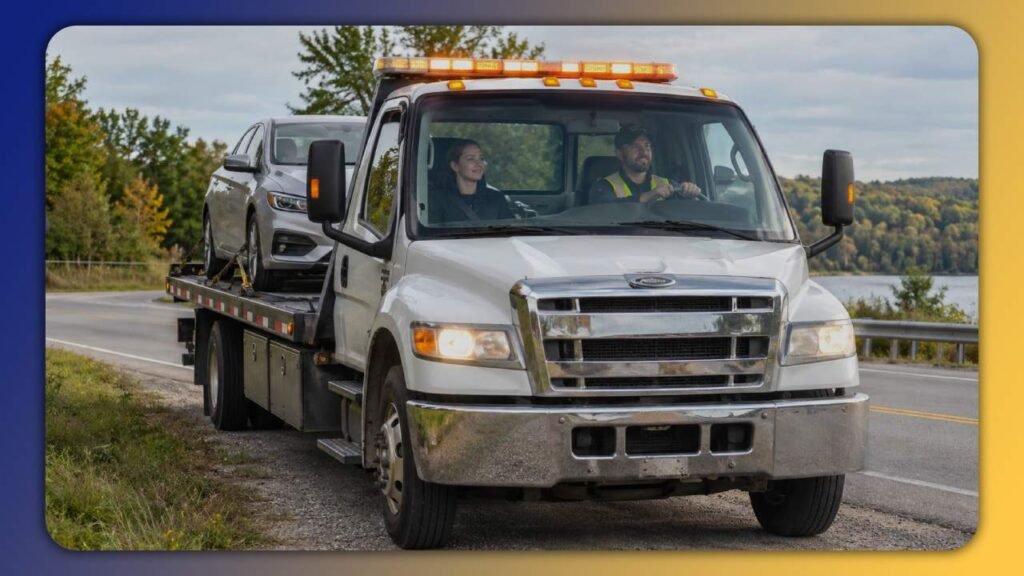
Yes, Ontario allows you to ride in the tow truck cab when the operator agrees and a safe seat exists. You cannot stay inside your own vehicle during towing. Before requesting Greater Toronto Area (GTA) service, tell dispatch how many people need transportation. Ontario does not require every tow operator to offer passengers a ride. Confirm your seat, destination, and transport plan before the truck arrives.
Table of Contents
ToggleRide in the Tow Truck in Ontario: 2026 Passenger Rules
A customer can travel in the tow truck cab when the operator permits safe transport. Ontario’s towing framework does not guarantee passenger transportation. You should ask before booking instead of relying on an earlier towing experience. The driver must follow passenger safety requirements and company procedures. Never assume every vehicle recovery includes a customer seat.
Ontario towing law and customer passengers
Ontario regulates towing through the Towing and Storage Safety and Enforcement Act (TSSEA) and related regulations. The province explains that tow drivers may carry customers from disabled vehicles. Ontario also prohibits salespeople from joining a tow to solicit products or services. A ride in the tow truck must serve a lawful transport purpose. Ask dispatch to confirm current operator rules for your particular job.
The difference between cab travel and riding inside your car
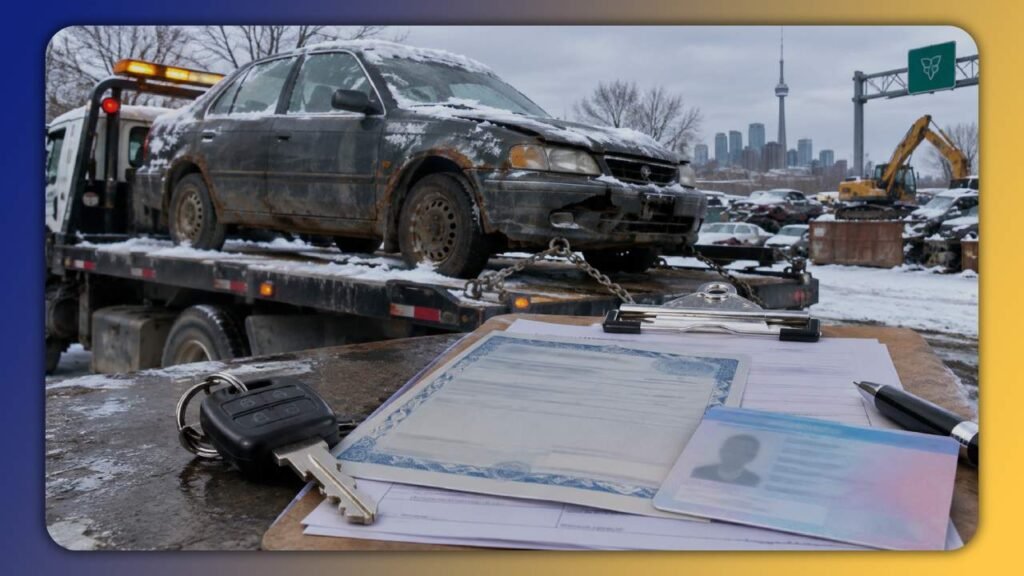
Ontario forbids anyone from occupying a vehicle while a tow truck tows that vehicle. You must leave your sedan, minivan, or sport utility vehicle before loading begins. The prohibition also applies when a flatbed carries the entire vehicle. Do not sit behind the wheel during transport. The driver needs an empty vehicle to load, secure, and unload safely.
If you cannot ride in the tow truck cab, arrange another vehicle for your journey. A friend, licensed taxi, or accessible transportation provider offers alternatives. Tell the towing operator where you will meet the vehicle. Your car and your passengers do not need to reach the destination together.
Ride in the Tow Truck With Your Car: Cab Seating Limits
Available passenger seats control how many people can travel with the driver. One empty cab seat does not accommodate 2 adults. Every person needs a separate, suitable position. Confirm the actual dispatched truck rather than assuming a standard pickup layout. Another service truck may have different seating arrangements.
Single drivers and additional passengers
A single stranded driver has a simpler transport request than a family of 4. Tell dispatch whether you have 1 adult, 2 adults, or 3 occupants. The dispatcher can check the assigned vehicle’s safe capacity. A ride in the tow truck may work for 1 passenger but not for the full group. Arrange a second vehicle when the cab cannot seat everyone.
Flatbed and wheel-lift cab arrangements
Flatbed trucks carry vehicles on a raised platform. Wheel-lift trucks raise 1 axle and keep another axle on the road. Neither towing method guarantees more passenger seats. Focus on the cab configuration rather than the towing equipment. You should also describe your vehicle accurately so dispatch sends the right truck.
Ontario Seatbelt and Child Passenger Requirements
Every accepted passenger needs proper seating and restraint protection. Ontario requires drivers to check that occupants have their own working seatbelts. Children need appropriate seats, boosters, or belts based on their legal requirements. Give the dispatcher your children’s ages before asking for a ride in the tow truck.
One working belt for each seated passenger
Each adult must occupy a seat with a properly fastened belt. Never combine 2 passengers under 1 restraint. Confirm the driver has enough approved seats before you enter the cab. Avoid riding on the floor, platform, or equipment storage area. A ride in the tow truck must follow normal road safety standards.
Child seats and booster-seat planning
Explain whether your child uses a rear-facing seat, forward-facing seat, or booster. The towing operator must confirm whether the cab supports proper installation. Do not assume a child seat fits safely beside the driver. Ask dispatch about suitable restraints before requesting a ride in the tow truck. A separate family vehicle often handles child transport more easily.
Passengers with mobility or medical needs
Tell dispatch about wheelchairs, mobility aids, or limited climbing ability. A high tow-truck cab can create an access barrier. The operator may not have a lift or suitable securement equipment. Arrange an accessible taxi or medical transport when necessary. A ride in the tow truck should never require unsafe lifting or unsecured mobility equipment.
Families, Pets and Alternative Transportation
Discuss the whole group before the dispatcher assigns a truck. Family members, pets, and mobility equipment all affect transport planning. A tow service transports disabled vehicles first. Passenger carriage depends on available seats and the provider’s policies. You can avoid roadside delays by explaining the complete situation.
Families with 2 or more passengers
State the number of adults and children clearly. A ride in the tow truck for 1 driver does not automatically include 2 relatives. Ask whether the company will carry the entire group or only the vehicle owner. If the cab lacks space, arrange a second vehicle. Agree on a safe meeting point away from active traffic.
For example, 2 parents and 2 children need 4 suitable passenger positions and the proper child restraints. Do not interpret a truck’s physical cabin size as its legal passenger capacity. The dispatcher should confirm the precise vehicle assigned to the tow.
Pet carriers and animal policies
Tell dispatch about dogs, cats, or other animals before booking. Describe each animal’s size and whether you have a secure carrier. Some operators restrict animals because of safety or insurance policies. Do not promise your pet a ride in the tow truck without approval. Keep animals away from active traffic while waiting.
A pet carrier does not replace a passenger restraint. Never leave an animal inside a vehicle that the tow operator is moving. Arrange a taxi that accepts pets if the towing company declines animal transportation. Confirm the destination and arrival time with your alternative driver.
Highway Breakdowns Across Toronto and the GTA
Your personal safety comes before passenger transport decisions. Highway 401, Highway 400, and the Don Valley Parkway present fast traffic and narrow shoulders. Move away from active lanes whenever conditions permit safe movement. Give dispatch your highway direction, nearest exit, and exact roadside position.
Safe waiting positions before the truck arrives
Activate hazard lights and assess traffic before opening any door. Follow police instructions when officers manage the scene. Stay inside a secured vehicle when exiting would expose you to moving traffic. Leave the vehicle only when the surrounding area allows safe movement. Do not stand between your car and approaching vehicles.
A ride in the tow truck starts only after the driver identifies a safe boarding point. Do not climb into the cab while the operator performs recovery work. Keep children and animals away from winches, ramps, and moving equipment. The operator can direct you to a protected waiting area.
Dispatch details that reduce roadside delays
Share 4 facts when contacting roadside dispatch: location, vehicle type, mechanical problem, and passenger count. Identify the 401 express or collector lanes where relevant. Mention nearby exits such as Keele Street or Kennedy Road. The dispatcher uses these details to identify your location and vehicle requirements.
Ask the dispatcher directly whether you can ride in the tow truck assigned to your call. Provide a mobile number for updates. A clear passenger count avoids finding out about unavailable seating after arrival. If the operator cannot provide a seat, start your alternate ride arrangement immediately.
Toronto, North York and Scarborough towing coverage
GTA Towing and Roadside Assistance advertises 24/7 towing and roadside support across Toronto and surrounding GTA communities. Its published services cover car towing, battery boosts, tire changes, and lockout help. Review our GTA towing services when your vehicle needs assistance. Ask dispatch to confirm the exact pickup area and whether you can ride in the tow truck.
Accident Scenes and Restricted Towing Zones
An accident introduces police directions and road-clearance priorities. Do not assume a ride in the tow truck is available after every collision. Injuries, vehicle damage, and roadway restrictions can affect transport plans. Call 911 for injuries or immediate danger. Follow responding officers’ directions before requesting a towing dispatch.
Collision recovery and passenger movement
Move occupants away from damaged vehicles whenever responders direct safe evacuation. Never remain inside a car during loading or towing. Take necessary personal items only when emergency responders allow access. A ride in the tow truck is secondary to medical care and accident-scene safety. Request an ambulance when someone needs urgent medical attention.
GTA Towing and Roadside Assistance provides professional GTA accident towing for collision-damaged vehicles. The company describes flatbed recovery, insurance documentation, and destination coordination on its accident page. Passenger accommodation needs separate confirmation. Do not assume accident recovery automatically includes transport for your family.
Restricted highway towing zones in the GTA
Ontario maintains restricted towing zones on selected provincial highways in the GTA. Authorized operators handle towing in those zones. A tow company outside the approved arrangement cannot simply respond to every restricted-zone incident. Follow official traffic management instructions and ask who will move your vehicle.
A restricted-zone tow does not guarantee a ride in the tow truck. Ask the authorized driver about passenger seats and drop-off plans. Keep the police or traffic responder informed when your group needs separate transportation. Confirm where the operator will deliver your car.
Consent, Destination and Consumer Rights in Ontario
You have towing rights even when you cannot travel inside the tow truck. Ontario requires certified towing operators and drivers to follow its consumer-protection rules. Ask for the operator’s identity and applicable rate information. Review the consent document before authorizing a non-exempt tow. Never sign a blank authorization form.
Written consent and rate disclosure
The operator generally needs your consent before towing, except where lawful exemptions apply. You should receive the company’s maximum rate schedule and customer rights information. Check the towing destination on the consent form. A ride in the tow truck does not change your right to review charges.
Property access and destination confirmation
Take your phone, wallet, medication, keys, and identification before the driver secures the car. Ontario protects reasonable access to personal belongings, subject to lawful directions. Ask how to collect anything you cannot remove at the scene. Tell your chosen repair business when the tow is expected to arrive.
You can ride in the tow truck and still request a different drop-off for your vehicle. Confirm both destinations in advance. The tow operator generally follows the route and destination obligations attached to the authorized tow. Ask for an itemized invoice when service ends.
Passenger Ride Costs and Towing Quotes
Ontario has no universal passenger-ride price that applies to every tow. Operators set service terms within legal requirements and filed maximum rates. Confirm any passenger-related charge before authorizing service. The final quote depends on the actual towing job. Never assume a ride in the tow truck is free or guaranteed.
Towing charges versus passenger transportation
A towing estimate reflects distance, vehicle condition, truck type, and recovery needs. Passenger transportation is a separate question for dispatch. Ask whether the operator includes an approved cab passenger without an extra charge. Get any additional cost explained in writing. A ride in the tow truck must not introduce an unapproved surprise fee.
The company’s website advertises affordable GTA towing, but its service pages do not establish a standard ride-along fee. Ask for the current job-specific estimate and the maximum rate schedule. Do not apply another Ontario company’s published rates to your own tow. Pricing varies between a normal roadside pickup and a complex recovery.
Quick-reference checklist for safe passenger arrangements
| Task | Timing | Method | Difficulty |
| Confirm passenger count | First dispatch call | Give adult and child totals | Easy |
| Verify available restraints | Before truck arrival | Ask about approved seats and child equipment | Moderate |
| Confirm towing destination | Before consent | Name your chosen location | Easy |
| Arrange backup transportation | Before loading | Call taxi, friend, or accessible transport | Moderate |
| Review charges and documents | Before authorization | Check rate schedule and written consent | Easy |
Complete all 5 tasks before departing when conditions allow safe preparation. The list helps you plan a ride in the tow truck without overlooking a passenger or paperwork issue. Use the table for local breakdowns and highway incidents. Never delay emergency medical care to finish paperwork.
Booking GTA Towing and Roadside Assistance
Tell dispatch about passenger needs during your initial call. GTA Towing and Roadside Assistance lists 24-hour service and serves Toronto and nearby GTA communities. The website provides the contact number +1 (437) 460-6320. The company does not publicly guarantee passenger seating on every tow. Ask for confirmation before requesting a ride in the tow truck.
Information to give the dispatcher
Describe your exact location and direction of travel. Provide your car’s make, model, and condition. Name your preferred garage, dealership, or home address. State the number of passengers, children’s restraint needs, and any pets. Mention mobility assistance or accessibility requirements before the company dispatches a vehicle.
A clear phone conversation reduces unnecessary delays. Request confirmation of the truck type, passenger plan, destination, and estimate. Ask the dispatcher to repeat any conditions that affect your ride in the tow truck. Save the confirmation on your phone when possible.
Frequently Asked Questions
Can you ride in the tow truck with your car in Ontario?
Yes, when the operator agrees and an approved passenger seat is available. You cannot travel inside the vehicle being towed. Ask dispatch before booking.
Can children ride in the tow truck in Ontario?
Yes, only with suitable seating and legally required child restraints. Confirm cab compatibility before dispatch. Arrange another passenger vehicle when suitable equipment is unavailable.
Can you ride in the tow truck with a pet?
Sometimes, depending on company policy. Tell dispatch about your dog, cat, or other animal. Confirm whether the operator accepts a secure carrier.
Do Ontario towing companies have to give passengers a ride?
No. Ontario generally permits customer passengers, but operators do not have to transport them. Request a confirmed seat or arrange separate travel.
Can you stay inside a car on a flatbed tow truck?
No. Ontario prohibits passengers inside a vehicle during towing. Exit before loading, and use an approved truck-cab seat or another vehicle.
Final Recommendations for Ontario Drivers
Confirm passenger transportation before authorizing a tow. Check seats, child restraints, pets, accessibility, and destination. Ontario permits cab passengers, but operators decide whether to offer seats. For GTA assistance, contact our dispatch team at GTA Towing and Roadside Assistance. Ask whether you can ride in the tow truck before dispatch.
 Call us at
 Email us at