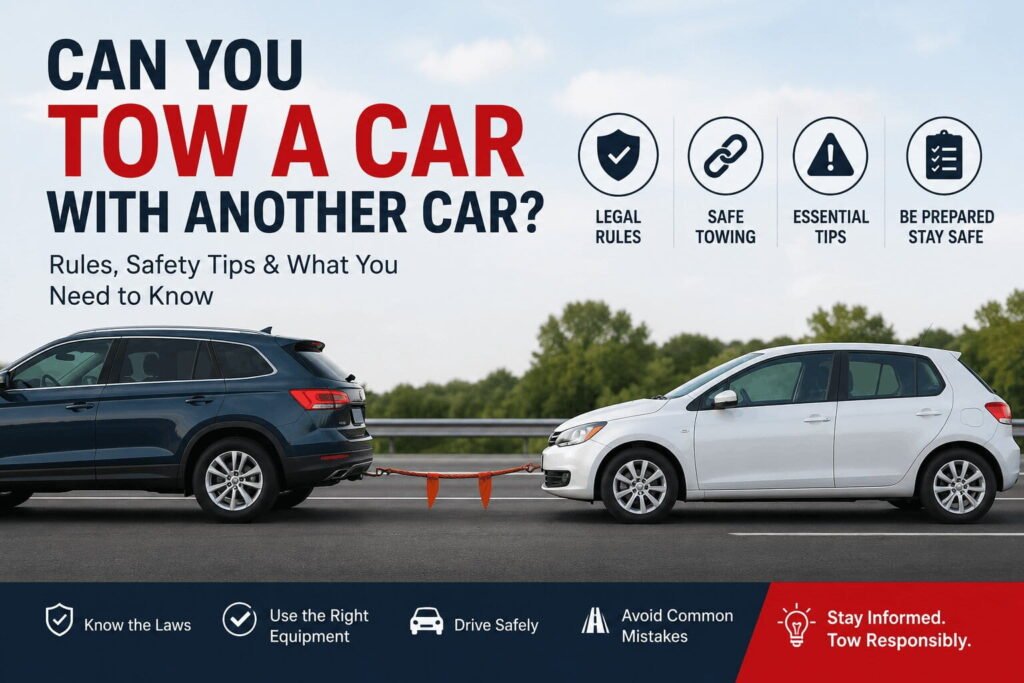
Your car won’t start, you’re stuck on the side of the road, and a friend pulls up in their truck. The obvious question comes up fast: can you just hook up a chain and tow the car home yourself?
The short answer is yes, you can tow a car with another car. But whether you should depends on the distance, the road conditions, your equipment, and your province’s laws. Get any of those wrong, and you’re looking at a damaged bumper, a snapped strap, or worse, a citation from a police officer who watched the whole thing happen.
This guide walks through what’s actually legal, what’s actually safe, and when it’s smarter to just call a tow truck.
Table of Contents
ToggleIs It Legal to Tow a Car With Another Car?
In most Canada provinces, yes, towing a vehicle with another passenger car is legal for short distances, as long as you follow basic safety rules. These usually include:
- Using a proper tow strap, rope, or rigid tow bar rated for the vehicle’s weight
- Keeping speeds low, typically under 35-45 mph
- Having working brake lights and turn signals on the towed vehicle
- Using a “Vehicle Being Towed” sign in some provinces.
Towing regulations in Canada vary by province and territory. Each jurisdiction has its own requirements for towing equipment, safety chains, lighting, and road safety. Depending on where you’re driving, additional rules may apply to towing methods and distances. Before towing a vehicle, check your local provincial or territorial regulations to ensure you’re using the proper equipment and complying with all applicable laws.
What You Need Before You Start
Towing with another car isn’t just about attaching two vehicles and driving off. You need the right gear and the right conditions.
Tow Strap or Tow Rope
A rated tow strap is the minimum requirement. Look for one with a weight capacity well above your vehicle’s actual weight, since sudden jerks put far more stress on the strap than steady pulling does. Nylon straps with reinforced loops at each end are the standard choice for short-distance towing.
Tow Bar (Safer for Longer Distances)
A rigid tow bar connects to both vehicles’ frames or tow hooks and keeps a fixed distance between them. This removes the slack and snap risk that comes with straps, making it a better option if you’re towing more than a mile or two.
Two Attachment Points
Never attach a tow strap to a bumper. Bumpers aren’t designed to handle towing loads and will bend, crack, or tear off. Use the factory tow hooks or eyelets, usually found under the front or rear of the vehicle, sometimes behind a small plastic cover.
Step-by-Step: How to Tow a Car Safely
- Inspect both vehicles. Confirm the towed car’s steering and brakes actually work. A car with no brakes or locked steering is not safe to tow this way.
- Attach the strap or bar to the tow points, not the bumper or suspension parts.
- Communicate a plan. Agree on hand signals, a radio, or phone call setup so both drivers know when to slow down, stop, or turn.
- Start slow. Ease into the pull to avoid snapping the strap or jerking the towed vehicle.
- Keep a steady, moderate speed. Sudden acceleration or braking is the most common cause of accidents during improvised towing.
- Maintain extra following distance from other traffic, since your stopping distance is longer than usual.
- Avoid sharp turns. Wide, gentle turns keep tension even and prevent the towed car from swinging.
Common Mistakes People Make
Even experienced drivers get this wrong sometimes. Here’s what tends to cause trouble:
- Attaching to the bumper. This is the number one cause of damage during DIY towing.
- Towing on the highway. Higher speeds leave no room for error if the strap fails or a driver overreacts.
- Ignoring transmission type. Automatic transmissions in the towed vehicle may need the engine running or the transmission in neutral to avoid internal damage. Check your owner’s manual first.
- Skipping communication. Two drivers with no plan for signals often end up braking at different times, which strains or breaks the connection.
- Using worn or unrated straps. A strap that looks fine can still be rated well below what’s needed for your vehicle’s weight.
When You Should Just Call a Tow Truck
Towing with another car makes sense for short trips, like moving a dead car out of an intersection or getting it a few blocks to a driveway. It’s not the right call when:
- The distance is more than a mile or two
- You need to use a highway or busy road
- The towed vehicle has no working brakes or steering
- Weather conditions are poor, like rain, ice, or fog
- Either vehicle has significant weight or size differences
A professional tow truck driver has the equipment, insurance, and training to handle these situations without risking further damage or a roadside accident. If your car needs to go more than a few minutes away, a proper tow service is almost always the safer and often cheaper option once you factor in potential repair costs.
Insurance and Liability Considerations
If something goes wrong during an improvised tow, such as a collision, strap failure, or property damage, liability can get complicated fast. Standard auto insurance policies don’t always cover damage that happens during non-professional towing. Before attempting it, check your policy or call your insurer to understand what is and isn’t covered.
Final Thoughts
Towing a car with another car is doable, and plenty of people do it safely every year for short, low-speed trips. The key is using the right equipment, attaching to the correct points, communicating clearly between drivers, and knowing your province’s specific rules. For anything beyond a short haul, a professional tow truck remains the safer bet.
If you’re ever unsure whether your situation calls for a DIY tow or a professional one, it’s worth making a quick call to a local towing company. Most will give you honest advice over the phone, even if you don’t end up needing their truck.
Frequently Asked Questions
Is it legal to tow a car with a rope in Canada?
In many parts of Canada, towing a car with a rope may be permitted under certain conditions, but the rules vary by province and territory. Some jurisdictions have specific requirements for towing equipment, safety chains, lighting, and maximum towing distances. Before towing a vehicle with a rope, check your local provincial or territorial regulations to ensure you comply with all applicable road safety laws.
Can you tow a car with a chain?
A rated tow chain can work, but it’s less forgiving than a strap since it has no give and can snap suddenly under stress. Straps or rigid bars are generally the safer choice.
How fast can you go while towing a car with another car?
Most safety guidelines recommend staying under 35-45 mph, and slower is better on rough roads or in traffic.
Do you need a special license to tow a car with another car?
No, a standard driver’s license is enough for towing a passenger vehicle with another passenger vehicle for short distances. Commercial towing operations require separate licensing.
Can an automatic transmission car be towed with the engine off?
It depends on the model. Many automatics need the engine running or the transmission in neutral to avoid damage. Always check the owner’s manual first.
What’s the safest way to attach a tow strap?
Always use the factory tow hooks or eyelets under the front or rear of the vehicle, never the bumper or suspension components.
Can you get a ticket for towing a car improperly?
Yes. Police can cite drivers for unsafe towing setups, missing signage, excessive speed, or towing on roads where it’s restricted.
Is towing a car with another car covered by insurance?
Not always. Coverage depends on your policy, so it’s smart to confirm with your insurer before attempting a DIY tow.
How far can you safely tow a car with a strap?
Short distances, generally under a mile or two, are the practical limit for strap towing. Longer distances call for a tow bar or professional tow truck.
What should I do if the towed car’s brakes don’t work?
Don’t attempt to tow it with a strap or rope. Call a professional tow truck, since a car without functioning brakes is a serious safety risk on any incline or in traffic.
 Call us at
  Email us at