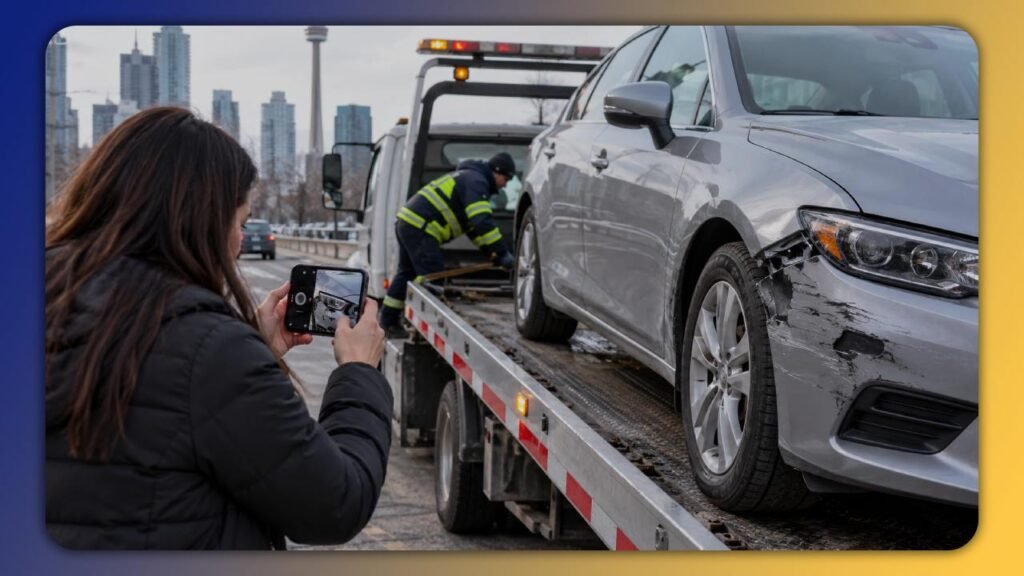
If you’ve ever been stranded on the road in Toronto, one of the first questions is usually: how long will it take for a tow truck to arrive? Here’s a detailed look at what you can expect based on experience, including real examples and practical tips.
Table of Contents
ToggleQuestion 1: How long does a tow truck usually take to arrive in different locations?
Answer: As mentioned, arrival times vary. In urban areas, it’s usually 15–30 minutes, though rush hour or bad weather can push it to 45+ minutes. In rural areas, it can take 30–60 minutes or longer. I’ve seen city calls resolved in 12 minutes, while remote areas sometimes take nearly an hour.
Question 2: What factors most influence how fast a tow truck arrives?
Answer: Several factors come into play:
- Location: Proximity to the truck’s base matters.
- Traffic & Road Conditions: Heavy traffic, accidents, or road closures slow things down.
- Time of Day: Nights or early mornings may mean fewer trucks are available.
- Type of Service Requested: Heavy-duty towing or accident recovery takes longer than a simple flat tire pick-up.
- Weather: Rain, snow, or ice can double the wait time.
Question 3: Are there times when tow trucks arrive faster or slower?
Answer: Yes, absolutely. Peak hours in cities slow things down. Weekends and holidays can be tricky because demand spikes, especially on highways. Conversely, mid-morning weekdays often see faster responses because trucks are less tied up with multiple calls.
Question 4: How does the type of vehicle affect tow truck arrival?
Answer: Standard cars are usually quick and straightforward—often the first trucks dispatched. Trucks, SUVs, or commercial vehicles may require specialized tow trucks, which aren’t always nearby, adding 10–20 extra minutes. I’ve had a call for a delivery truck that took nearly 50 minutes because the right tow truck was 20 miles away.
Question 5: Can you share a memorable case study or example?
Answer: Sure! Once, a customer’s car broke down during a heavy rainstorm on a highway. The first tow truck dispatched couldn’t reach them due to flooding, so a second one had to come from 15 miles away. It took nearly 70 minutes, but we managed to keep the customer updated the whole time. They appreciated the transparency, which reduced frustration despite the wait.
Question 6: How do emergency vs. non-emergency calls differ in arrival time?
Answer: Emergency calls—like accidents on major roads—are prioritized. In those cases, trucks often arrive within 10–20 minutes in cities. Non-emergency calls, like broken-down vehicles in parking lots, may be scheduled slightly later, sometimes 30–45 minutes depending on availability.
Question 7: Does the dispatch system or service company affect response times?
Answer: Definitely. Companies with GPS-tracked fleets and smart dispatch systems are much faster. I’ve seen trucks routed efficiently in real-time to reach customers in 12–15 minutes, while older systems relying on manual dispatch could take 30–40 minutes. The efficiency of the dispatch center is often the difference between a frustrating wait and a smooth experience.
Question 8: What advice can you give to customers to minimize wait time?
Answer: A few tips:
- Provide exact location details, including landmarks.
- Mention vehicle type and issue so the right truck is dispatched.
- Call during off-peak hours if possible.
- Use companies with real-time tracking so you can see ETA updates.
I’ve noticed that calls with clear information are always resolved faster than vague “broken down on the road” reports.
Question 9: Are there regional differences in tow truck availability?
Answer: Absolutely. Big cities like New York or London usually have many trucks nearby, so arrival is fast. Smaller towns or rural highways may have one or two service providers, so waits can be long. I’ve worked in areas where a truck had to come from 20–30 miles away, which naturally increases response times.
Question 10: How do you personally manage customer expectations during the wait?
Answer: Communication is key. I always:
- Give an accurate ETA based on current traffic and truck location.
- Update the customer if there’s any delay.
- Explain why it might take longer (weather, traffic, type of tow).
This transparency usually keeps customers calm, and they appreciate knowing exactly what’s happening instead of being left wondering. In my experience, honest updates are as valuable as quick service.
 Call us at
  Email us at