Yes — a vehicle can be towed from private property in Toronto, but only when specific conditions are met. The property owner or an authorized representative has to request it, the property generally needs proper signage, and the towing company has to be operating under Ontario’s current towing regulations. Without those pieces in place, a tow can be disputed or considered improper.
This article breaks down exactly what has to line up for a private property tow to be valid, and what both drivers and property owners should know about how the process actually works.
Table of Contents
ToggleThe Short Answer
A tow truck can’t simply show up and remove a vehicle from a parking lot because someone thinks it doesn’t belong there. In Ontario, towing and vehicle storage operators are regulated under the Towing and Storage Safety and Enforcement Act (TSSEA), which came into force province-wide on January 1, 2024. It requires operator and driver certification, published and transparent rates, and documented authorization before a tow takes place.
On top of the provincial framework, Toronto has its own municipal rules — including Toronto Municipal Code Chapter 915, which addresses parking on private and municipal property — that shape how signage and enforcement are supposed to work locally.
What Has to Be True Before a Tow Happens
For a private property tow to be considered valid, several things typically need to line up:
- The property owner or an authorized representative (property manager, superintendent, or security company with documented authority) requests the tow
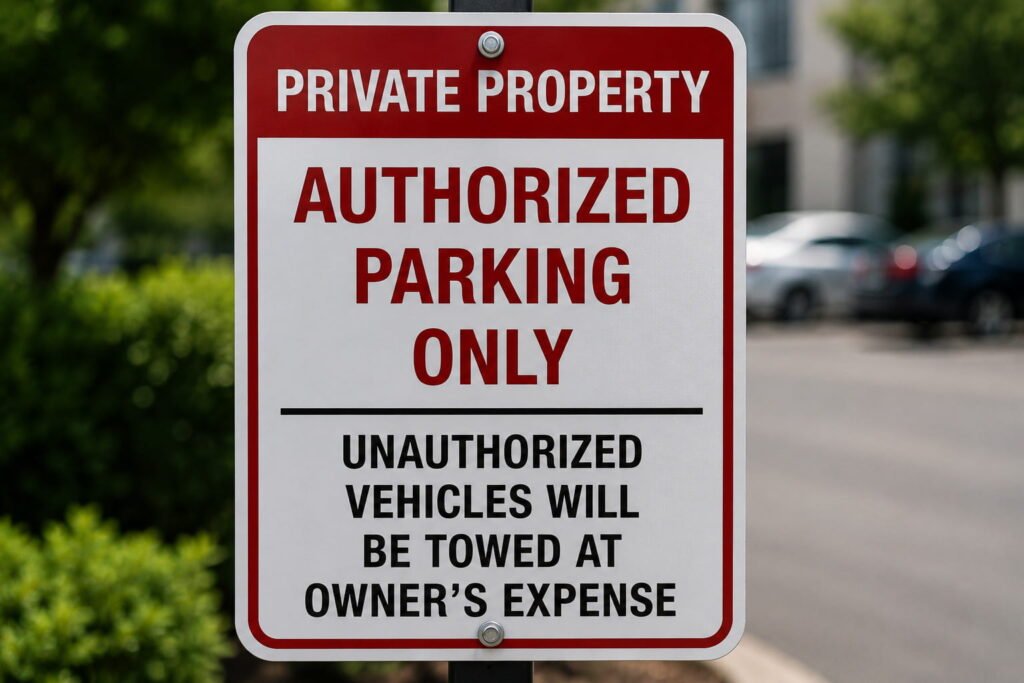
- The property has clear, visible signage at entrances stating parking restrictions and that unauthorized vehicles may be removed at the owner’s expense
- The vehicle is genuinely in violation — parked without permission, blocking access, or in a restricted space
- The towing company is certified and provides a transparent, itemized invoice
If any of these pieces is missing — particularly authorization or signage — a driver may have legitimate grounds to dispute the tow.
Common Situations Where Towing Applies
Private property towing usually comes up in a handful of recurring scenarios:
- A vehicle parked in a commercial plaza or business lot without permission
- A car blocking a driveway, loading zone, fire route or reserved space
- Someone parked in a spot marked for tenants, customers or permit holders only
- A vehicle left in a private lot well past any posted time limit
Each of these is a legitimate reason a property owner might request a tow, provided the property’s signage and process actually support it.
When a Tow Might Be Disputable
A tow becomes disputable when the basic conditions weren’t met. If signage was missing, outdated, or not visible from where the vehicle was parked, that’s a common ground for a challenge. The same is true if the tow wasn’t actually authorized by the property owner, or if the towing company can’t produce proper certification or an itemized invoice on request.
This is one of the reasons property owners considering property towing for their lot should have signage and authorization documented before an issue comes up, rather than trying to sort it out after a tow has already happened.
What a Driver Should Do If Their Vehicle Was Towed
If a vehicle disappears from a private lot, the first step is checking for signage on the property that identifies the towing company or lists a contact number. Most legitimate private-property tows leave a trail — a sign, a notice, or a number to call. From there, a driver can contact the towing company directly to confirm the vehicle’s location and request an itemized invoice before paying anything.
If something about the tow doesn’t add up — no signage, no explanation, or charges that don’t match what was disclosed — that’s worth raising directly with the towing company, and if unresolved, through the appropriate regulatory channel.
The Bottom Line
Towing from private property in Toronto is legal, but it isn’t automatic or unconditional. It depends on proper authorization, visible signage, and a towing company operating within current provincial requirements. Both property owners and drivers benefit from understanding where the actual conditions are — it prevents disputes on one side and unnecessary towing on the other.
FAQs
Is it legal to tow a car from private property in Toronto?
Yes, as long as the property owner or an authorized representative requests it, the property has proper signage, and the towing company follows current Ontario towing regulations.
Can a landlord have a tenant’s guest towed?
A landlord or property manager can generally request a tow if the vehicle is parked without authorization and the property’s signage and process support it. The specifics can depend on lease terms and property rules.
What should I do if my car was towed from a private lot?
Look for signage on the property identifying the towing company, contact them to confirm your vehicle’s location, and request an itemized invoice before paying.
Does a property need signage to legally tow a vehicle?
Clear, visible signage is generally treated as a baseline requirement, and its absence is one of the most common reasons a tow is disputed.
Who regulates towing companies in Ontario?
The Towing and Storage Safety and Enforcement Act (TSSEA), which took effect province-wide on January 1, 2024, sets certification, rate transparency and consent requirements for tow operators.
 Call us at
  Email us at